


Reliable electrical installation planning gives Bridstow homeowners a clear route to safer, more practical properties. Whether you are modernising an older house, improving a recently renovated room, or preparing for new technology, careful planning helps every circuit, accessory and protective device work together. Good work starts with understanding how the building is used today and how it may change over the next few years.
In a village property, the electrical layout may have grown in stages. Older wiring, limited socket provision, outbuildings and later alterations can all affect the best approach. A sensible assessment identifies what can be retained, what needs upgrading and where future capacity should be allowed for. This avoids rushed decisions and helps keep disruption under control from the first survey through to final testing.
Start with a practical assessment of the property
The first stage is to discuss how electricity is used throughout the home. Kitchens, utility rooms, home offices, workshops and garden buildings each place different demands on an installation. A room-by-room review can identify overloaded extension leads, inconvenient socket positions, poor lighting controls and circuits that no longer match modern living. It also highlights where a new dedicated circuit would be more suitable than adding further accessories to an existing one.
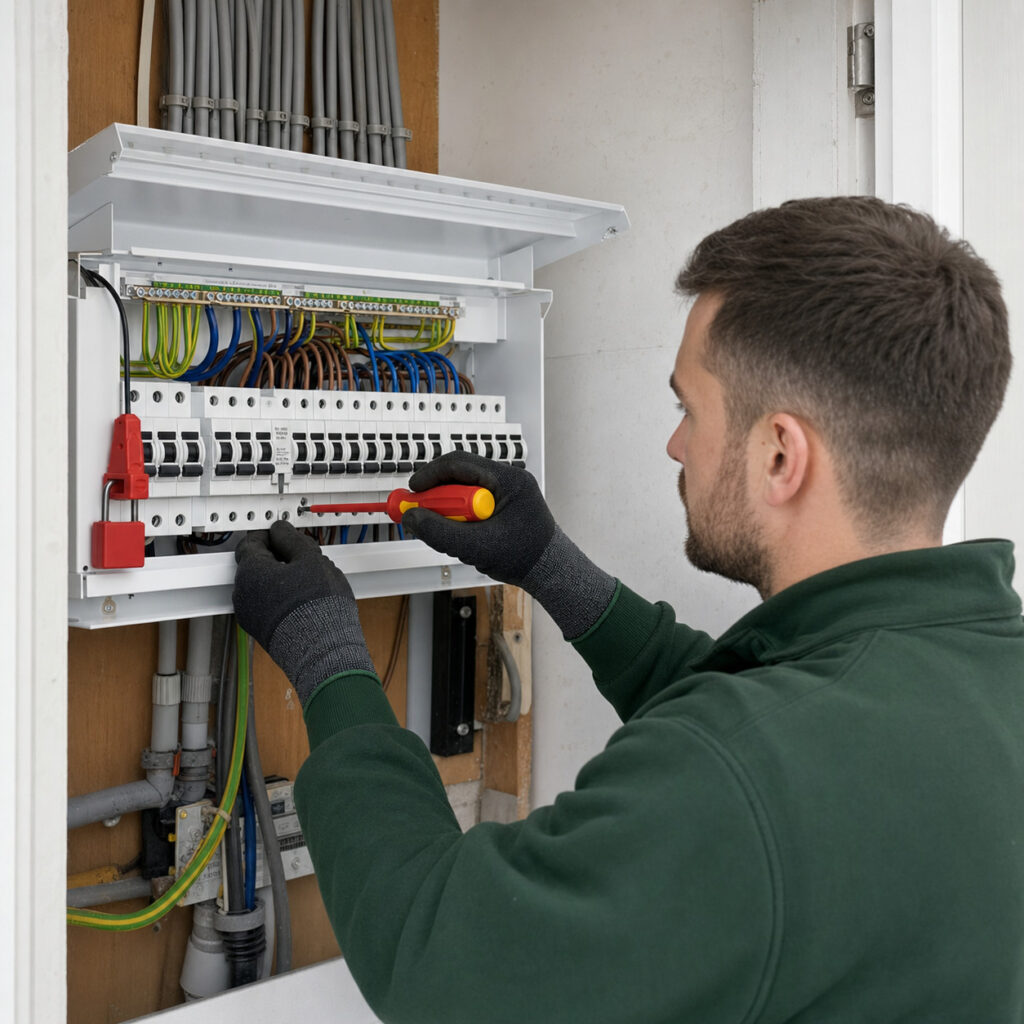
Condition matters as much as convenience. An electrician can inspect the consumer unit, visible cabling, earthing and bonding arrangements, and the protection provided to individual circuits. Signs such as warm accessories, nuisance tripping, damaged fittings or unexplained power loss should be investigated rather than covered over with a quick replacement. Where an installation is older or its history is unclear, testing provides useful evidence for deciding which improvements should be prioritised.
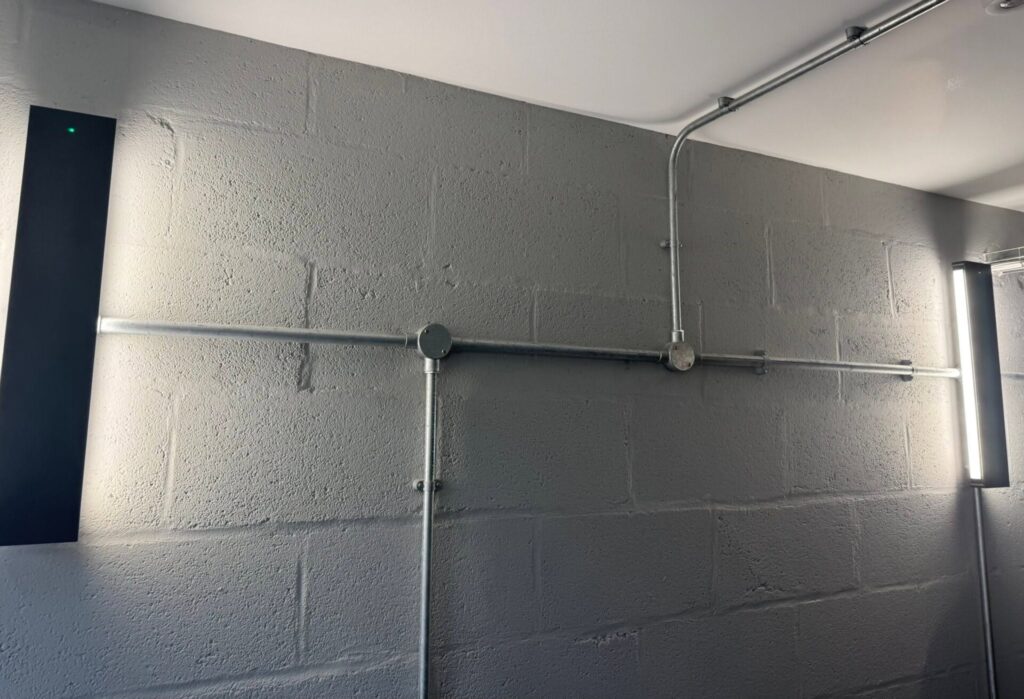
Planning should also account for the character and construction of the property. Cable routes may need to avoid historic finishes, solid walls or awkward roof spaces, while external work must be protected from moisture and mechanical damage. Discussing access, decoration and likely making-good early helps create a realistic sequence of work and a clearer budget.
Build capacity for modern household demands
Homes now combine high-load appliances, entertainment equipment, networking, heat pumps and charging technology. Even when the immediate project is modest, it is worth considering the likely demand on the main supply and consumer unit. A future-ready plan can include spare ways, sensible circuit separation and routes for additional cables, reducing the need for disruptive work later.
Consumer unit improvements are often part of a wider plan rather than an isolated job. Modern protective devices can improve fault protection, but the correct solution depends on the existing installation and the circuits being supplied. A replacement should be specified around the property’s actual needs, with clear labelling and testing after completion. If you are comparing options, our consumer unit upgrade guidance explains why design and verification are important.
Small details also make a substantial difference. Place sockets where furniture and appliances will really sit, provide dedicated supplies for fixed equipment, and avoid hiding important isolation points behind cupboards. In an office or workshop, separate circuits and well-positioned data and power points can make the space safer and more adaptable. These decisions are inexpensive to make during planning but difficult to correct once walls and floors are finished.
Improve comfort, control and energy use
Lighting is another area where thoughtful electrical installation planning pays off every day. Layered lighting can combine general illumination with task lighting and softer accent points, allowing each room to work for different activities. Two-way or intermediate switching can improve circulation areas, while dimmers and carefully positioned controls can make living spaces more comfortable without leaving lamps running unnecessarily.
External lighting should be planned around visibility, security and neighbours. Low-glare fittings can illuminate paths, entrances and parking areas without shining into windows. Outdoor accessories need suitable protection from weather, and cable routes should be considered alongside planting, paving and drainage. Our lighting installation service information covers the practical choices involved in creating useful indoor and outdoor lighting.
Energy efficiency is not just about changing lamps. Controls, occupancy sensors, timers and sensible zoning can help reduce wasted electricity, particularly in halls, utility areas and external spaces. The best result balances lower consumption with easy everyday use; controls that are confusing or badly located tend to be bypassed. A brief conversation about routines and preferences can therefore be as valuable as the equipment specification.
Allow for EV charging and future changes
Bridstow households considering an electric vehicle should raise charging requirements early, even if the charger will be installed later. The position of the parking space, cable route, consumer unit capacity and available internet connection can all influence the final design. A suitable installation should include appropriate protection, a practical cable run and a location that keeps the lead tidy while remaining convenient to use.
It is important not to treat an EV charger as an ordinary outdoor socket. The charger normally needs its own dedicated circuit and the installation must be selected around the vehicle, charger model and property supply. Load management may be useful where other large appliances operate at the same time. Our EV charger planning article outlines the questions homeowners should consider before choosing a position and specification.
A well-planned project finishes with testing, documentation and clear handover information. Keep records of circuits, accessories and any future-ready provisions so later work can be designed from reliable information. For Bridstow homes, the aim is a safe, tidy and understandable installation that supports present routines while leaving sensible room for change.