


For households in Wilton, choosing an electric vehicle charger is only the first part of the installation. The charger must work safely with the property’s existing electrical system, sit in a practical position, and remain convenient through changing routines and vehicle upgrades. A carefully planned installation can make home charging feel effortless, while a rushed one can create cable-routing problems, nuisance tripping, or avoidable expense later.
Start with a proper assessment of the property
A reliable EV charger installation begins with an assessment of the incoming supply, consumer unit, earthing arrangement, and available capacity. Older properties may have had several electrical additions over the years, including extensions, workshops, electric showers, hot tubs, or outdoor supplies. Each of these can affect how a new charging circuit should be designed. The installer should also consider the condition and rating of the existing consumer unit rather than assuming that an unused way automatically means the installation is ready.
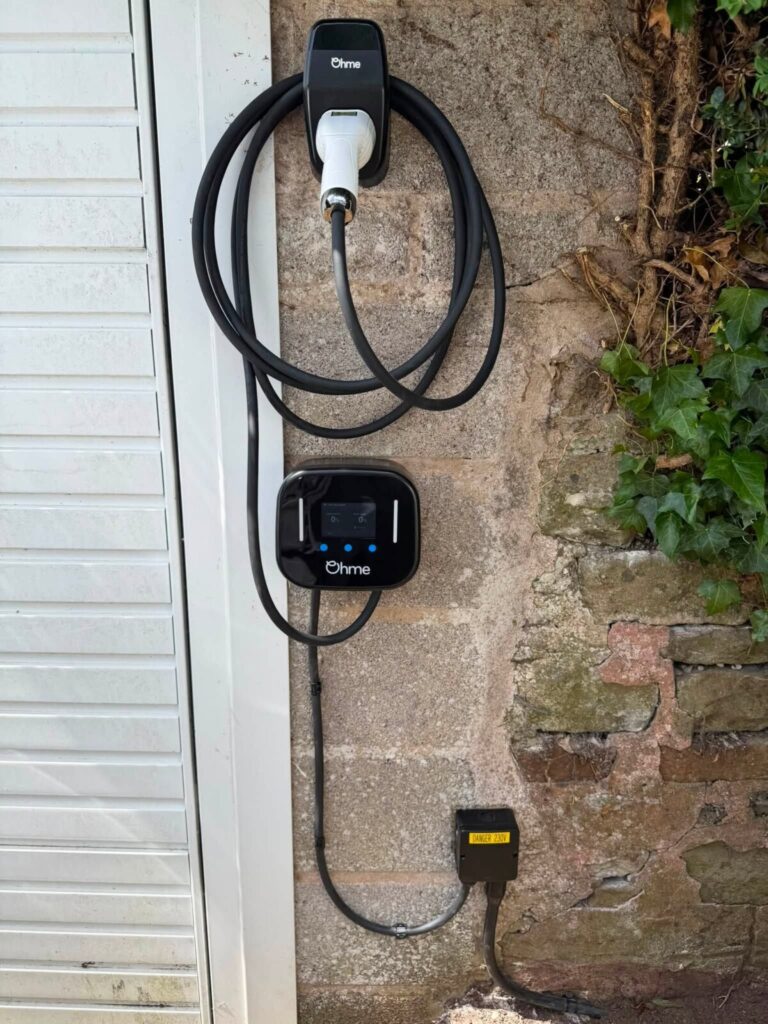
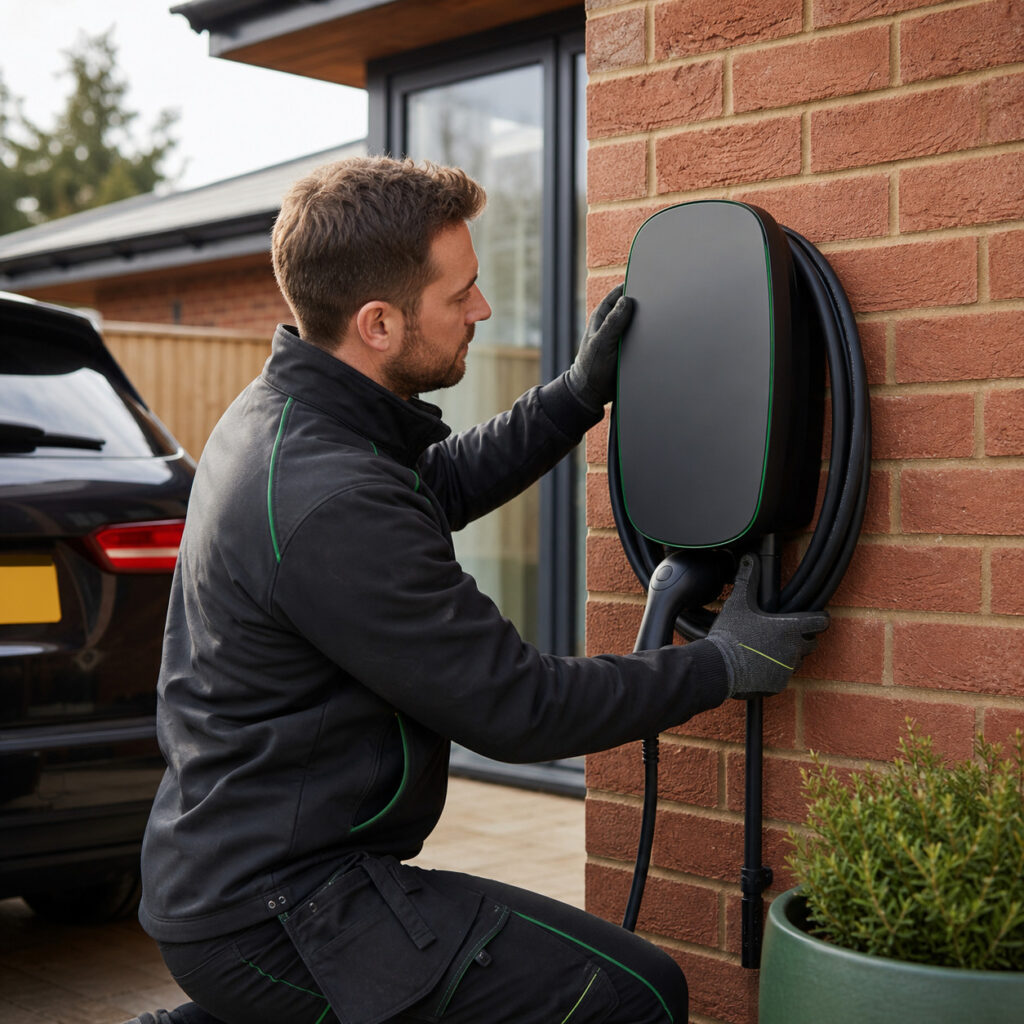
The charger location matters just as much as the equipment specification. A driveway position may be close to the car today but awkward if parking habits change, while a garage-mounted unit may need a longer cable route and additional protection against impact or moisture. In Wilton homes with detached garages, stone walls, outbuildings, or long garden paths, the cable route should be planned to protect the building fabric and keep the finished installation tidy. Where digging, external conduit, or surface-mounted containment is required, discussing the visual finish in advance helps avoid surprises.
It is also sensible to review the whole household demand profile. Charging commonly takes place overnight, but immersion heaters, storage heaters, heat pumps, ovens, and tumble dryers may operate at similar times. A site assessment can identify whether load management would help the charger adjust its output automatically when other appliances are using power. This can support efficient charging without unnecessarily increasing the property’s maximum demand.
Choose charger features that fit everyday use
Not every driver needs the same charger. A single electric car used for a predictable commute may be well served by a straightforward tethered or untethered unit, whereas a busy household may benefit from scheduling, user controls, solar integration, or load balancing. Looking beyond the headline charging speed is important: the vehicle’s onboard charger, the available supply, and the length of the daily journey all influence how quickly a battery can realistically be replenished.
Tethered chargers are convenient because the cable is always ready to use, although the cable needs a sensible storage position when the car is away. Untethered chargers can look neater and allow the driver to choose the cable length, but the cable must be stored securely and kept clean. Smart controls can be useful for taking advantage of lower-cost tariffs or matching charging to solar generation. These features should be selected because they solve a real household need, not simply because they appear on a specification sheet.
Good cable management is part of the electrical design. The route should avoid creating a trip hazard across access paths and should allow doors, gates, and vehicle movements to operate normally. External cables and accessories need suitable protection for their environment, with fixings and containment chosen for the wall, exposure, and likely physical contact. A neat installation is easier to inspect, easier to maintain, and less likely to be damaged in day-to-day use.
Safety, protection, and future flexibility
EV charging places a sustained load on the electrical installation, so protective devices and residual-current protection must be appropriate for the charger and the wider system. The installer should verify the characteristics of the charging equipment, select compatible protection, and test the circuit after installation. This is one reason a domestic socket extension lead or improvised outdoor arrangement is not a substitute for a dedicated charging point.
If the consumer unit is dated, crowded, or lacks suitable space for modern protection, an upgrade may be part of the project. Our consumer unit upgrade service explains why improving the board can be worthwhile when adding a new high-demand circuit. The right solution depends on the existing equipment and test results, so a clear assessment is preferable to fitting extra hardware by default.
Future flexibility is worth considering too. A homeowner may add a second electric vehicle, solar panels, battery storage, or an outbuilding supply later. Conduit capacity, spare ways, cable routes, and the position of isolators can all be reviewed during the first installation. Planning for realistic changes can reduce disruption, although the design should remain proportionate to the property rather than adding unnecessary complexity.
Testing and maintaining the installation
Once the charger is installed, the circuit should be inspected and tested, the controls configured, and the owner shown how to use the equipment safely. It is helpful to understand the status lights, scheduling settings, reset procedure, and any app-based controls before relying on the charger for daily travel. Keep the manufacturer’s information available and report repeated tripping, heat, unusual smells, damaged cables, or intermittent operation promptly.
Other electrical issues can sometimes become noticeable when a new high-load appliance is introduced. If lights flicker, protective devices operate unexpectedly, or another circuit behaves unusually, our electrical fault finding service can help identify the cause rather than treating the symptom. A charger should not be used to mask an underlying fault elsewhere in the property.
For Wilton homeowners, the best result comes from matching the charger, cable route, protection, and controls to the actual building and driving routine. A professional installation provides a safe dedicated supply, a practical charging position, and documentation that makes future maintenance clearer. If you are also planning broader improvements, our lighting installation service can be considered alongside the electrical work so external access routes, garages, and parking areas are comfortable and well lit.