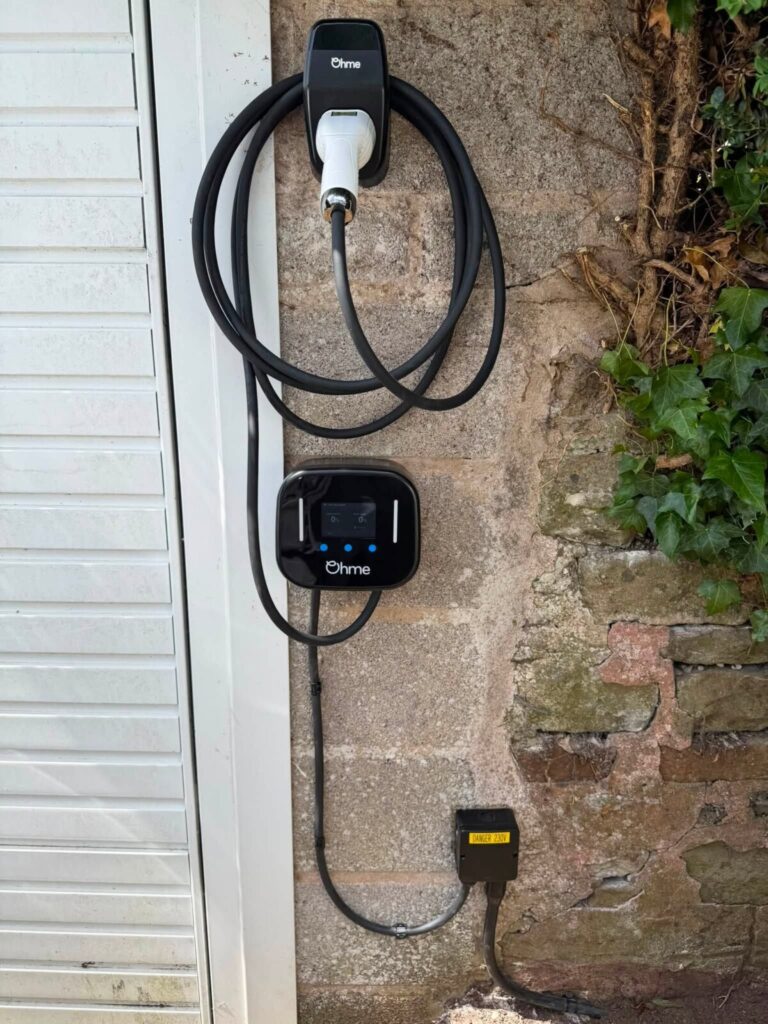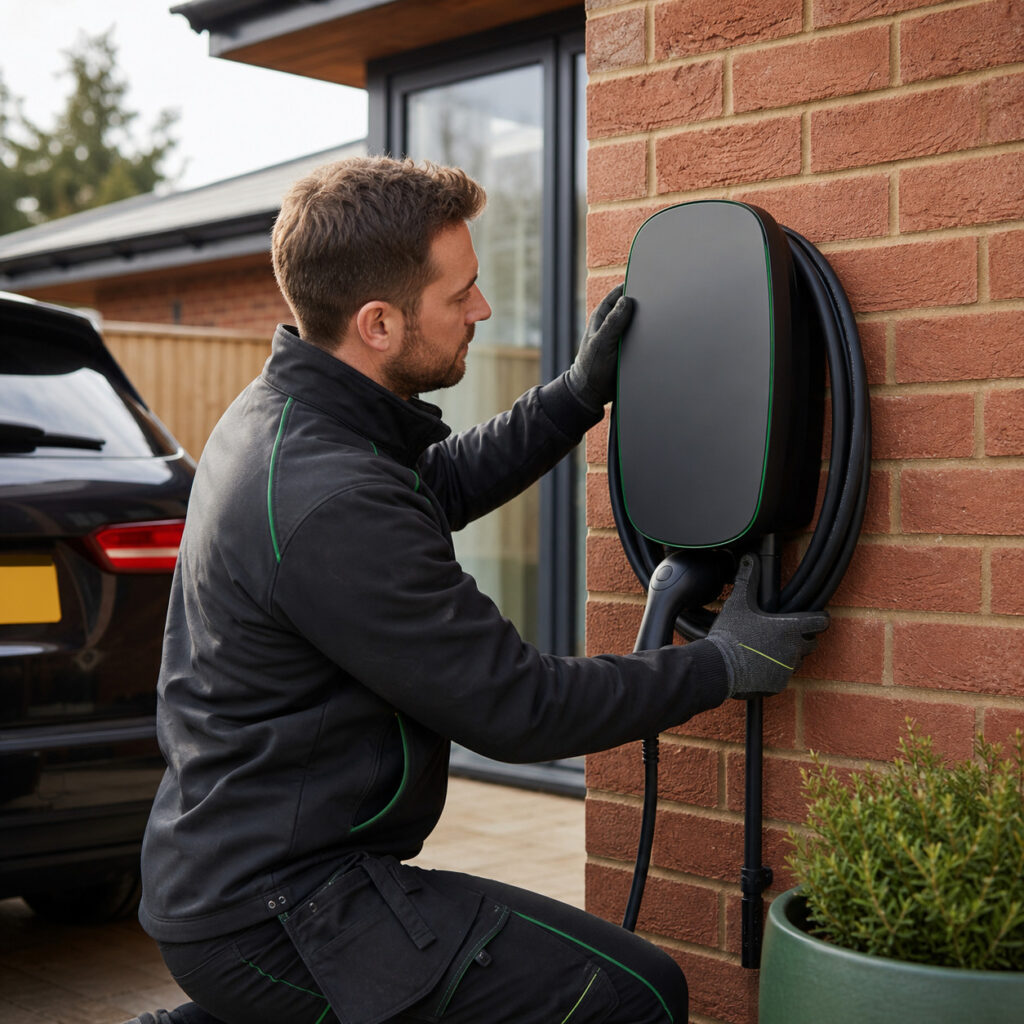



Installing an electric vehicle charger at home is becoming a practical improvement for households across Coleford. It can make daily charging more convenient, reduce reliance on public charge points and help a home keep pace with changing transport habits. A well-planned installation is not simply a matter of fixing a unit to an outside wall: the charger, cable route, consumer unit, earthing arrangements and available electrical capacity all need to work together safely.
Every property has a different starting point. Some homes have a modern supply with spare capacity and an easy route to the driveway, while others may have older wiring, a detached garage or a meter position that makes the installation more involved. A qualified electrician can assess those details before work begins, explain the practical options and design an installation that suits both the vehicle and the house.
Planning the right charger for your Coleford home
The right charger depends on more than its headline charging speed. A typical home may benefit from a reliable tethered unit for everyday convenience, while another property may prefer a socketed model that allows different cables to be used. The vehicle’s onboard charging limit, the household’s normal mileage and the time available overnight should all influence the decision. Choosing the highest-rated unit without considering these factors can add cost without improving the experience.
Location also matters. A charger should be positioned where the cable can reach the vehicle without creating a trip hazard or being stretched across a path. Installations on a driveway, garage wall or side elevation each bring different considerations around weather protection, access and cable protection. In Coleford’s varied residential streets, careful routing helps keep the finished work neat while reducing the risk of accidental damage from vehicles, gardening equipment or future building work.
It is also worth thinking about how the installation will be used in winter and during poor weather. The equipment should be accessible, the cable should have a sensible storage point and any external route should be protected against the conditions it will face. These practical details are easy to overlook during a quick quotation but make a noticeable difference to long-term convenience.
Checking the electrical supply before installation
A domestic charger adds a substantial load to the electrical installation, so the existing supply must be reviewed rather than assumed to be suitable. The electrician will normally consider the incoming supply, consumer unit, protective devices, earthing and the condition of the circuits that may be affected. If the board is already crowded or outdated, an upgrade may be recommended so the new circuit can be installed with appropriate protection and clear labelling.
Load management can be valuable where the home has other high-demand appliances such as an electric shower, heat pump, immersion heater or electric cooker. A smart charger may be able to adjust its output when overall demand rises, helping the household charge safely without unnecessarily increasing the agreed supply capacity. This should be designed around the property’s actual usage rather than added as a last-minute feature.
Older properties may need additional investigation. Hidden cable routes, previous alterations and outbuildings can affect the safest way to run a dedicated circuit. A careful inspection helps identify those issues early, avoids rushed decisions on installation day and provides a clearer explanation of any additional work. For homeowners considering broader electrical installation planning, the charger project can also be an opportunity to address related improvements in a coordinated way.
Making the installation safe, tidy and easy to use
A professional installation should leave more than a working charging point. The circuit should be protected by the correct devices, the cable route should be mechanically secure and the charger should be mounted firmly on a suitable surface. Outdoor equipment needs appropriate weather resistance, while indoor equipment still needs sensible positioning away from impact, moisture and clutter. The final arrangement should be straightforward for every driver in the household to operate.
Good workmanship is especially important when a cable passes through walls, along a garage or around the edge of a building. Penetrations should be sealed properly and external sections should be clipped or contained in a way that protects them from knocks. Where appearance matters, the route can often be planned around existing lines and access points so the finished installation feels like part of the property rather than an afterthought.
Homeowners who are also considering a consumer unit and circuit review should mention it at the quotation stage. Combining related work may reduce disruption and make it easier to coordinate testing, labelling and certification. It is also sensible to discuss future plans, such as solar panels, a second vehicle or a garage conversion, because the initial cable route and board layout may be planned with those possibilities in mind.
What to expect from a professionally completed EV installation
The process usually starts with a survey or detailed discussion about the property, vehicle and parking arrangements. The installer can then recommend a suitable charger, explain the proposed circuit and identify any preparation work. On the day, the work should include safe isolation, installation of the dedicated circuit, mounting and connection of the unit, testing and a clear handover.
Once the charger is operational, the homeowner should know how to start and stop a charge, use any app or scheduling features and recognise the basic status indicators. Instructions about cable storage and routine visual checks are useful too. If anything changes later, such as a new consumer unit, driveway alteration or additional high-load appliance, the charger installation should be considered as part of the wider electrical system rather than treated as an isolated device.
For Coleford households, a carefully designed EV charger installation can provide dependable daily convenience while supporting the safety and resilience of the whole home. Taking time to assess the supply, choose a sensible location and specify the correct protection helps avoid compromises and gives the installation a much better chance of serving the property well for years. Related EV charger installation advice can help homeowners prepare questions before arranging a quotation.