


Installing an electric vehicle charger at home can make everyday driving simpler, but the best results come from treating the charger as part of the property’s electrical system rather than as a standalone appliance. Homes around Monmouth vary widely, from older terraces and cottages to newer developments with different cable routes, consumer units and parking arrangements. A careful assessment helps identify the right charger position, cable route and protection before any installation work begins.
Good planning also protects the appearance and usability of the property. The charger should be convenient to reach, close enough to the parking space for the tether or charging lead, and positioned where it is protected from avoidable knocks and weather exposure. A qualified installer can look at the existing supply, explain the available options and produce a practical installation plan suited to the home.
Assessing the property before installation
The first stage is an inspection of the supply and the proposed charging location. The installer will consider the consumer unit, earthing arrangement, available capacity and the distance between the electrical equipment and the parking space. This is particularly important in older Monmouth properties, where the consumer unit may need improvement or where the most direct route for cabling is not obvious.
Access matters as much as electrical capacity. A driveway at the front of the house may allow a short, tidy route, while a side passage, detached garage or rear parking area can require a longer cable run and additional protection. The route should be planned to avoid unnecessary bends, vulnerable surfaces and trip hazards. Where cables pass through walls or external areas, suitable containment and weatherproof detailing help keep the finished work neat and durable.
Homeowners considering wider electrical improvements may also benefit from reviewing the property’s electrical installation at the same time. Combining related work can make access easier and provide a clearer view of how the new charger will operate alongside existing circuits.
Choosing a charger and a sensible position
Charger selection should be based on the vehicle, driving routine and property rather than on the highest headline power rating. A faster unit can be useful for drivers who return home with a low battery and need a short overnight charging window, while a more modest unit may be entirely suitable for regular local journeys. Smart charging features can also help schedule charging for convenient times and make it easier to use available tariffs without changing daily habits.
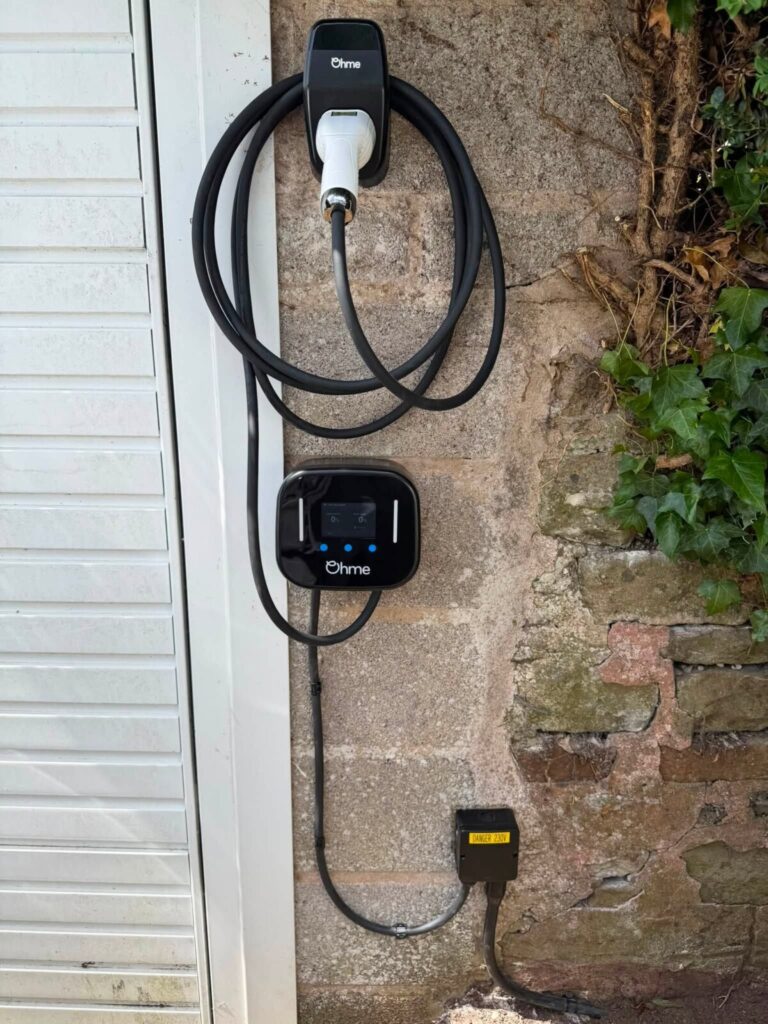
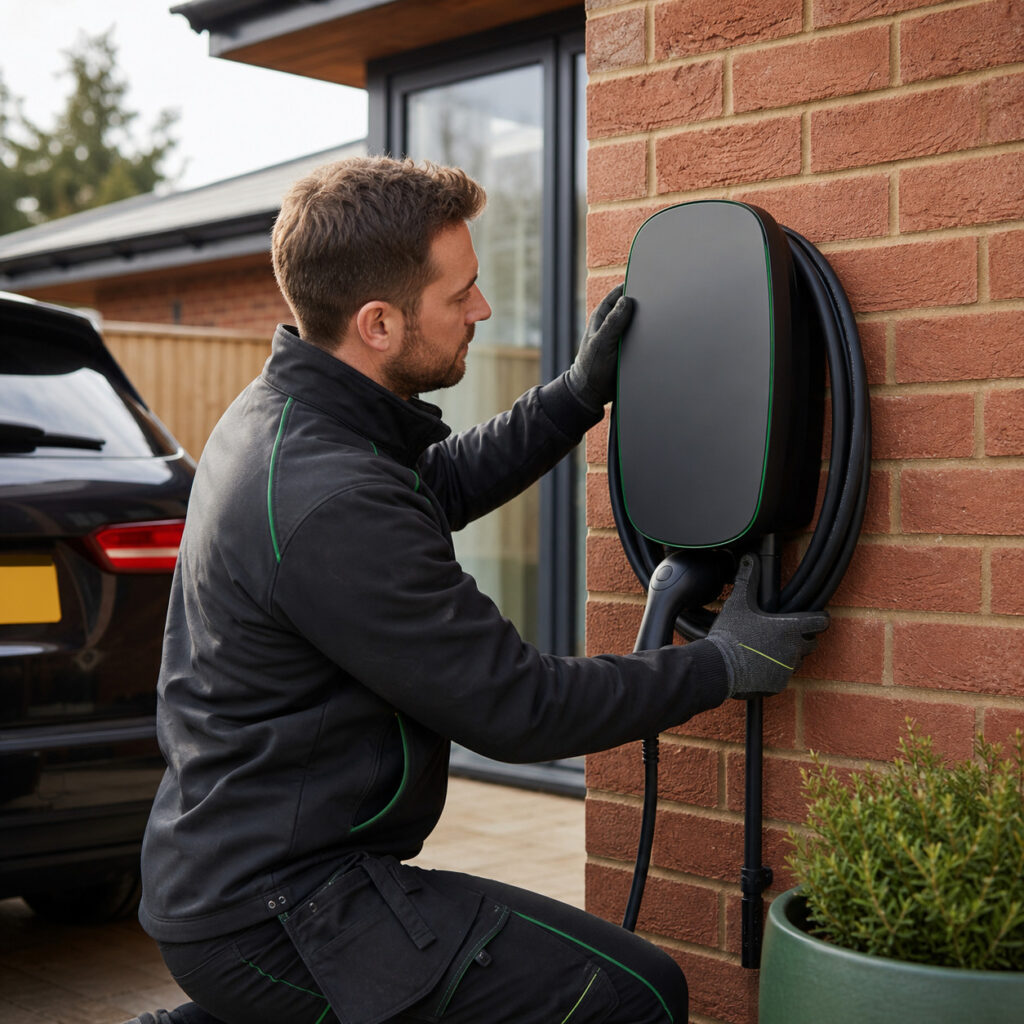
The physical position deserves careful thought. A wall-mounted charger should be high enough to be comfortable to use but accessible for all household users. It should not obstruct doors, gates or bins, and there should be enough room to connect the vehicle without stretching the cable across a walkway. For homes with more than one parking position, the installation plan should consider where the car is normally left and whether a longer lead or alternative mounting position would be more practical.
Some properties need a freestanding post or a carefully concealed route to reach an open parking area. In those cases, the appearance of the installation, the protection of the cable and the way water drains around the equipment all become part of the design. A tidy installation is easier to live with and less likely to be damaged by routine garden or driveway use.
Electrical protection and installation quality
An EV charger places a sustained load on the electrical system, so the protective arrangements must be appropriate for the charger and the property. The installer should select the correct cable size, isolation, residual-current protection and earthing measures, while also checking that the existing consumer unit and supply can safely support the new circuit. These decisions should be made from the inspection findings, not from a generic installation template.
Where upgrades are needed, the work may include improving the consumer unit, adding dedicated protection or arranging suitable cable containment. The aim is to provide a dependable circuit that can be tested properly and maintained in the future. Clear labelling is useful too, particularly when a property has several external circuits or when the charger is located away from the main board.
Once the charger is installed, testing and commissioning should confirm that the protective devices operate correctly and that the unit communicates properly with the vehicle. The homeowner should receive straightforward guidance on normal operation, isolation and what to do if a warning light or charging fault appears. Reliable workmanship at this stage helps prevent nuisance tripping and gives the installation a longer service life.
Preparing for dependable charging in Monmouth
Local conditions can influence the final design. Sloping drives, narrow access routes, stone walls and mixed-age building fabric may all affect how the cable is routed and how the charger is mounted. Planning around these details makes the result more secure and reduces the risk of an installation that looks unfinished or creates difficulties later.
It is also worth considering future needs. A household may change vehicles, add solar generation, alter parking arrangements or want a second charging point in time. The initial installation does not need to include every possible upgrade, but sensible spare capacity, accessible isolation and a documented cable route can make future changes less disruptive.
For homeowners comparing options, a dedicated EV charger installation discussion can clarify the likely work, while a broader home electrical service can help when the charger is part of a larger improvement project. The right approach is one that combines safe electrical design with a practical location, clear controls and a finish that suits the property.
Monmouth area: