


Electrical systems in Aconbury homes need to support everyday comfort, reliable safety and the way each property is actually used. A careful electrical installation is not simply a matter of adding sockets or replacing a light fitting. It involves understanding the age and construction of the building, checking the condition of existing circuits, planning sensible cable routes and making sure every new element works properly with the wider installation.
Whether you are improving a period cottage, updating a family house or preparing an outbuilding for a new purpose, early advice can prevent disruption later. A clear plan helps identify the work that should happen together, keeps finishes protected and gives you a more realistic view of the project. It also creates an opportunity to make practical improvements such as better lighting control, additional power where it is genuinely useful and provision for future electrical needs.
Assessing the Existing Electrical Installation
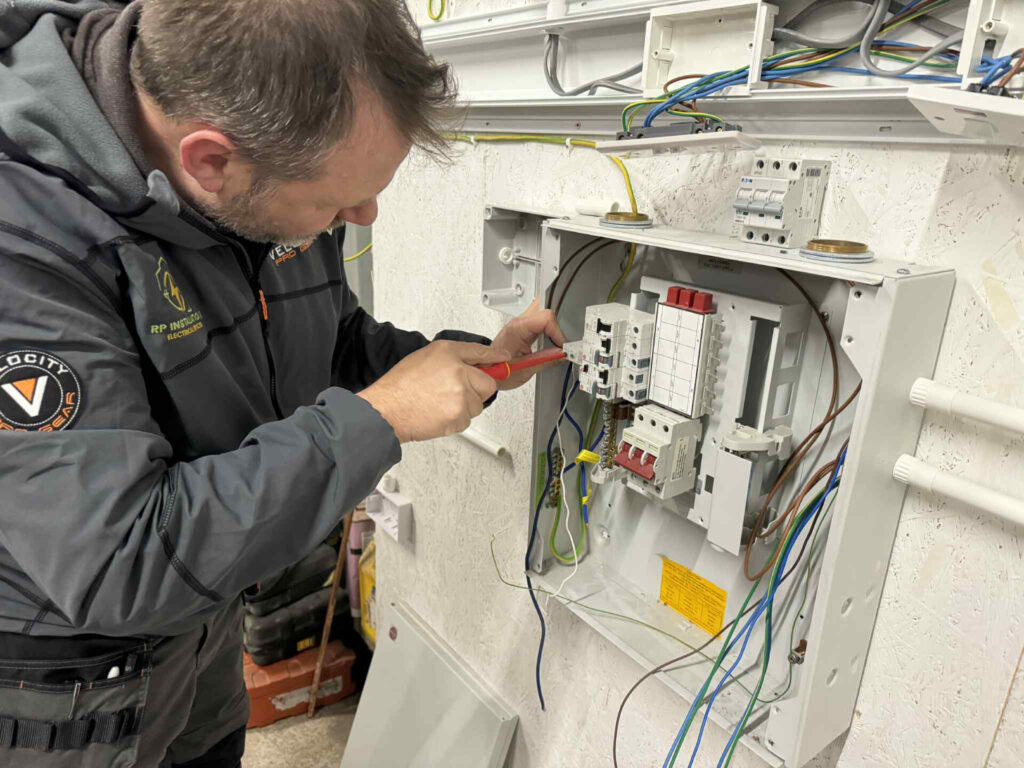
The first stage of any responsible project is to understand what is already in place. Older properties may have had several alterations over the years, leaving a mixture of wiring methods, accessories and circuit arrangements. Some changes may have been completed neatly while others can make fault finding or future expansion more difficult. An assessment should look at the consumer unit, visible cabling, protective devices, earthing and bonding, as well as the condition of sockets, switches and other accessories.
This is particularly important when rooms are being renovated. Removing walls, lifting floors or opening ceilings can reveal cable routes that were not obvious during the initial planning. Identifying those routes early allows new wiring to be positioned logically and reduces the chance of unnecessary rework. It also helps establish whether the existing installation has enough capacity for additions such as kitchen appliances, electric heating, workshop equipment or an EV charger.
For homeowners considering a wider improvement programme, our electrical installation service can be planned around the property rather than treated as a collection of unrelated small jobs. That approach makes it easier to coordinate testing, first-fix work and final connections.
Planning Power, Lighting and Controls
Good planning begins with how a room will be used. A home office may need power and data equipment positioned away from walkways, while a utility room often benefits from dedicated appliance supplies and well-spaced sockets. In kitchens, the layout of fixed appliances, work surfaces and storage should inform the position of switches and outlets. Bedrooms, hallways and living areas may need a combination of general sockets, task lighting and convenient two-way or dimming controls.
Lighting deserves the same level of attention as power. Layered lighting can combine a comfortable general level with focused illumination for worktops, reading areas or entrances. Outside, carefully positioned fittings can improve access and visibility without producing excessive glare for neighbours. Warm, well-controlled light is often more useful than simply increasing brightness, and efficient LED fittings can make frequent-use areas easier to run.
It is also worth considering future flexibility. Empty capacity, sensible circuit grouping and accessible isolation points can make later changes simpler. A plan that allows for additional equipment does not mean installing everything immediately; it means avoiding choices today that make tomorrow’s improvement unnecessarily expensive.
Working Safely Through Renovation
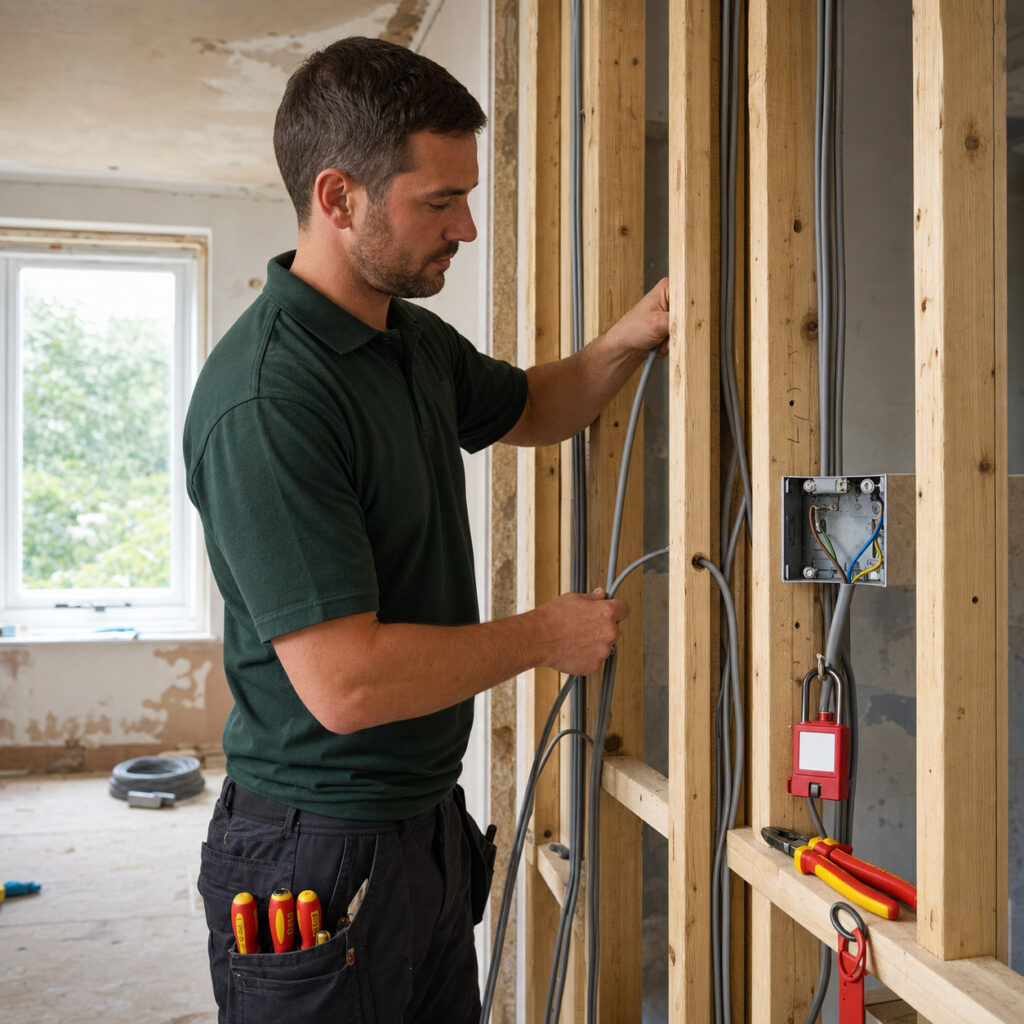
Electrical work is easiest to manage when it is coordinated with the wider building schedule. First-fix cabling normally needs to be completed before walls are closed, insulation is installed or joinery is fitted. Plastering and decorating should follow the disruptive stages, while final accessories and light fittings can be installed once surfaces are ready. Clear communication between trades helps protect cables, keeps boxes accessible and avoids damage to newly finished areas.
Small details make a significant difference to the finished result. Socket heights should suit furniture and appliances, switches should be easy to reach, and cables should be routed and supported appropriately. External supplies need suitable protection for their environment, while outbuildings may require careful consideration of distance, supply arrangements and local conditions. Any work affecting the main supply or protective arrangements should be approached with particular care.
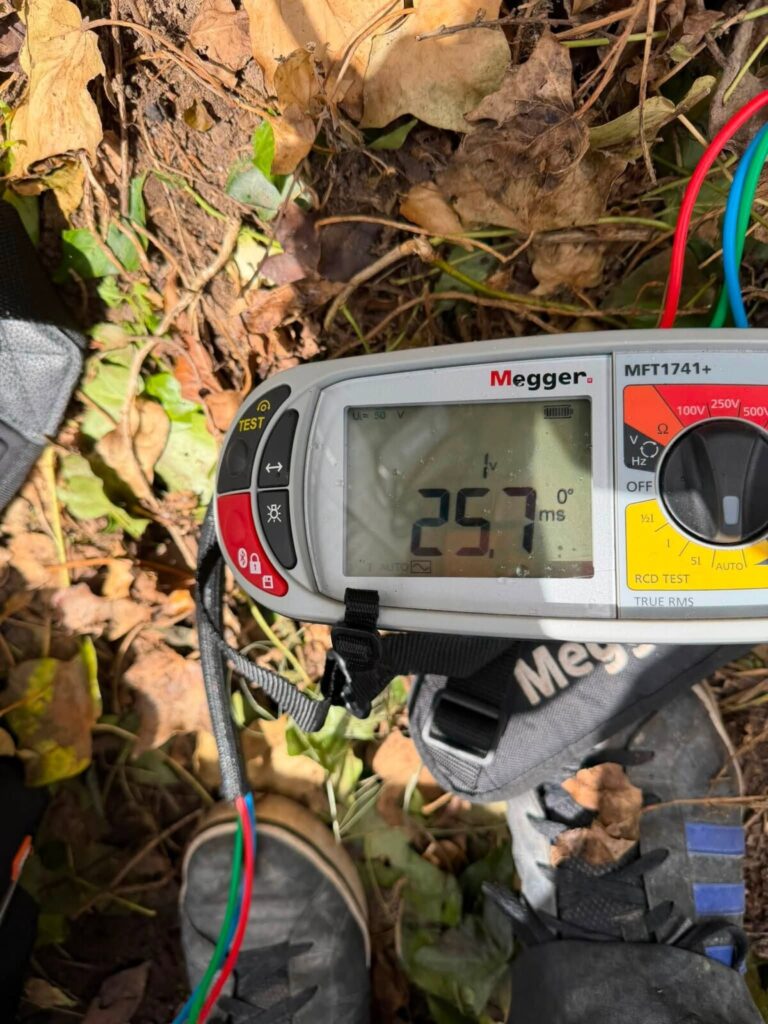
Testing is part of the installation rather than an optional final extra. Appropriate inspection and testing helps confirm that circuits are continuous, protected and operating as intended. Keeping records of completed work can also help future electricians understand what has changed, especially in a property that may continue to evolve.
Preparing for Future Electrical Needs
Many Aconbury homeowners are now thinking beyond immediate renovation goals. Electric vehicles, garden offices, heat pumps, upgraded kitchens and improved home working can all increase demand for well-planned power. A future-focused installation considers available capacity, likely cable routes and where equipment could be positioned, even if the purchase or installation will happen later.
EV charging is a good example. The most convenient charger location may not be the closest point to the consumer unit, and the route may need to pass around occupied rooms, driveways or external walls. Our EV charger installation guidance can help homeowners think through charger position, cable routing, everyday parking and the relationship with the existing supply before work begins.
Lighting upgrades can bring similar long-term benefits. If you are changing ceilings, landscaping a garden or refurbishing a hallway, it may be sensible to include provisions for additional lighting controls or exterior points while access is available. Our lighting installation service can be considered as part of the same coordinated plan, helping the finished system feel consistent throughout the property.
For local context, Aconbury sits within a rural area where property layouts, access arrangements and building types can vary considerably. A site-specific discussion is therefore more useful than relying on a generic checklist. The right installation should be safe, practical and discreet, with equipment and controls placed where they make daily life easier. With proper planning and testing, electrical improvements can add dependable value to a home without taking attention away from its character.