


For drivers in Much Birch, installing an electric vehicle charger at home can make everyday motoring simpler and more predictable. A dedicated home charge point is usually faster and more convenient than relying on public chargers, but the best result comes from planning the installation around the property, the vehicle and the household’s electricity use. A thoughtful survey helps identify the most suitable location, cable route and protection before any work begins.
Older rural homes can present different challenges from newer developments. Garages may be detached, parking may be on a gravel drive, and the existing consumer unit may be some distance from the preferred charging position. These details do not prevent a safe installation, but they do affect the design, equipment and cost. A qualified electrician can assess the full arrangement and explain the practical choices in plain language.
Assessing your Much Birch property before installation
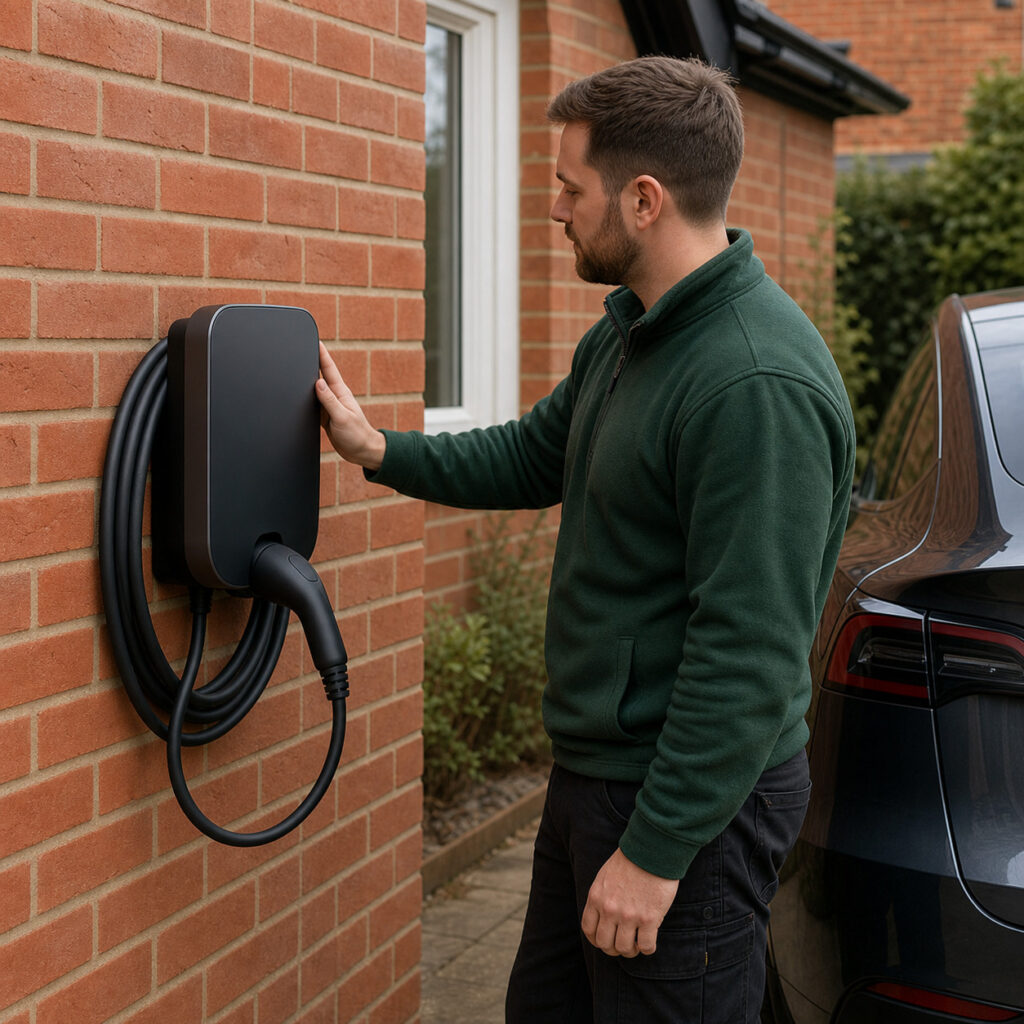
The first stage is to look at how the car will actually be parked and charged. A wall-mounted unit beside a garage may be ideal for one household, while another may need a weatherproof charger on an external wall facing the drive. The charging lead should reach the vehicle without crossing a footpath, creating a trip hazard or being regularly pinched by gates and doors. Positioning also needs to allow enough room for the connector and for the charger to be accessed comfortably in poor weather.
The electrical supply is equally important. The electrician will consider the rating and condition of the consumer unit, the distance to the charge point, the route for the cable and the demands of other large appliances. If the property has an older installation, an upgrade or additional protective equipment may be recommended before the charger is connected. This is part of responsible electrical installation: the charger should work as part of the home’s wider system rather than being treated as an isolated appliance.
Choosing a charger that suits daily driving
Charger selection should begin with your routine rather than with a feature list. A home charge point that replenishes the usual daily mileage overnight may be all that is required, whereas higher-mileage drivers may benefit from a faster unit if the property’s supply can support it. The vehicle’s onboard charging capability, the available electrical capacity and the length of the cable run all influence the realistic charging speed.
Smart charging can be useful where the household wants to schedule charging for quieter periods or coordinate it with solar generation. App controls, user access settings and energy monitoring may add convenience, but they should not distract from the basics: reliable hardware, sensible positioning and appropriate protection. It is also worth thinking about who will use the charger, whether guests need access and how the unit will be reached when the drive is wet, dark or busy.
For a broader view of the work involved, our EV charger installation service information explains how a domestic charge point can be planned around different property layouts. A discussion before purchase can prevent the common mistake of choosing a model first and discovering later that the cable route or supply arrangement needs changing.
Safe cable routing and outdoor protection
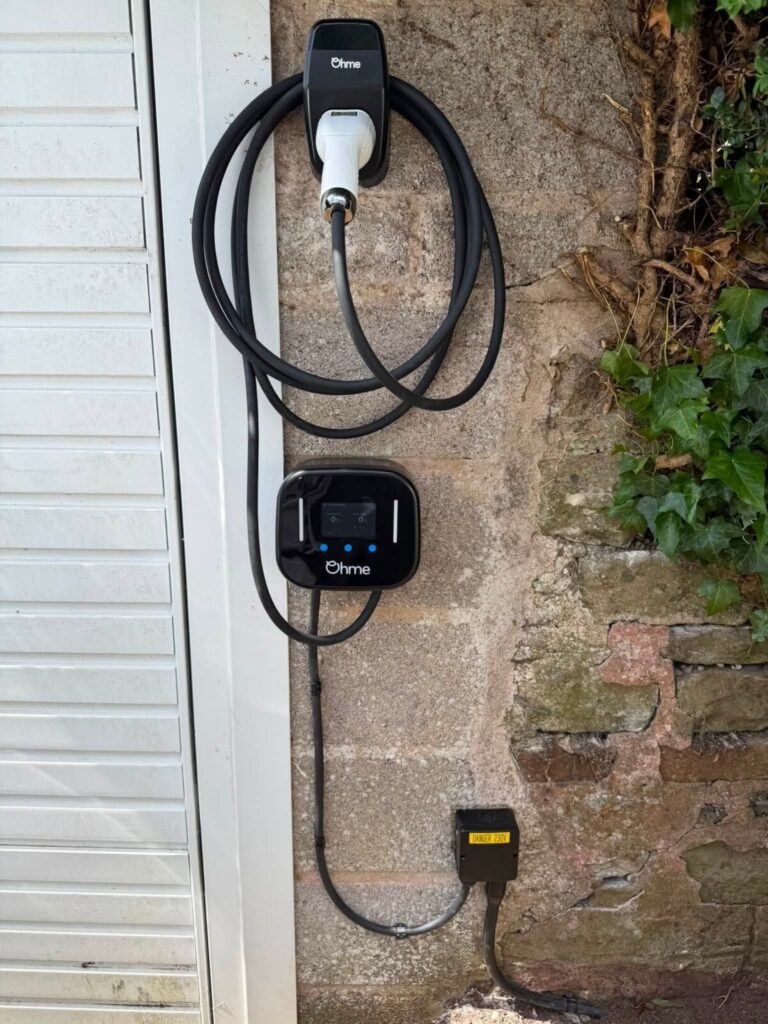
Many Much Birch properties need a cable to travel through a garage, along an external wall or across part of a garden boundary. The route should be neat, protected from impact and accessible for future inspection. Where a cable passes through masonry, suitable entries and seals help keep out moisture. External runs should be installed with appropriate mechanical protection and should not be left vulnerable to vehicles, garden equipment or repeated contact with stored items.
The charge point itself must be suitable for its environment. A unit exposed to rain, frost and sunlight needs an appropriate outdoor rating, while fixings must suit the wall or post supporting it. The electrician will also consider earthing, fault protection and the way the charger interacts with the existing supply. These details are not decorative extras: they are what help the system operate safely over years of charging cycles.
Good installation practice also leaves the homeowner with a clear understanding of how to use the equipment. You should know where the isolator is, what the normal indicator lights mean and what to do if the charger reports a fault. Simple guidance at handover can make the system less intimidating and help identify unusual behaviour early.
Planning the installation around your home
Preparation can make the appointment more efficient. Have the vehicle details available, identify where the car is normally parked and clear access to the consumer unit and proposed charger position. If you are considering solar panels, a battery or a future second electric vehicle, mention this before the design is finalised. The immediate installation may remain the same, but conduit routes, spare capacity and charger controls can sometimes be planned more intelligently when future needs are known.
It is also sensible to consider how the charger will look against the property. A tidy cable route and a carefully chosen position can reduce visual impact, particularly on a period home or a frontage that is visible from the road. Practicality still comes first, but good workmanship should leave the installation feeling like a considered part of the property rather than an afterthought.
Homeowners comparing options can also review our electrical services for related work that may be useful during the same visit. Once the survey is complete, the electrician can explain the recommended equipment, any preparatory work and the expected sequence clearly, so you can make an informed decision without guesswork.
Local advice for a dependable charge point
A home charger is a long-term electrical improvement, so quality of design and installation matters as much as the headline charging speed. In Much Birch, the right solution may involve a short, straightforward connection or a more carefully routed installation serving a detached garage or extended driveway. Either way, the work should be tailored to the property and documented clearly.
Before booking, ask what will be included in the survey, how the cable will be protected, what certificates or handover information will be provided and how any changes to the existing installation will be handled. Clear answers at this stage help avoid surprises and ensure the finished charger is convenient, safe and ready for regular use.