


For households in Marden considering an electric vehicle, a home charger can make everyday driving simpler, more predictable and less dependent on public charging points. The best installation is not just a matter of fixing a unit to an outside wall. It involves understanding how the property is supplied, where the vehicle is parked, how the cable will be routed and how the charger can work safely with the rest of the home’s electrical system.
Marden properties can vary from newer homes with straightforward driveways to older rural houses with detached garages, long boundaries or limited off-street parking. That means a useful installation starts with a site-specific assessment rather than assuming that one standard arrangement will suit every address. The following guidance explains the main decisions homeowners should consider before arranging an EV charger installation.
Start with the Home and Parking Arrangement
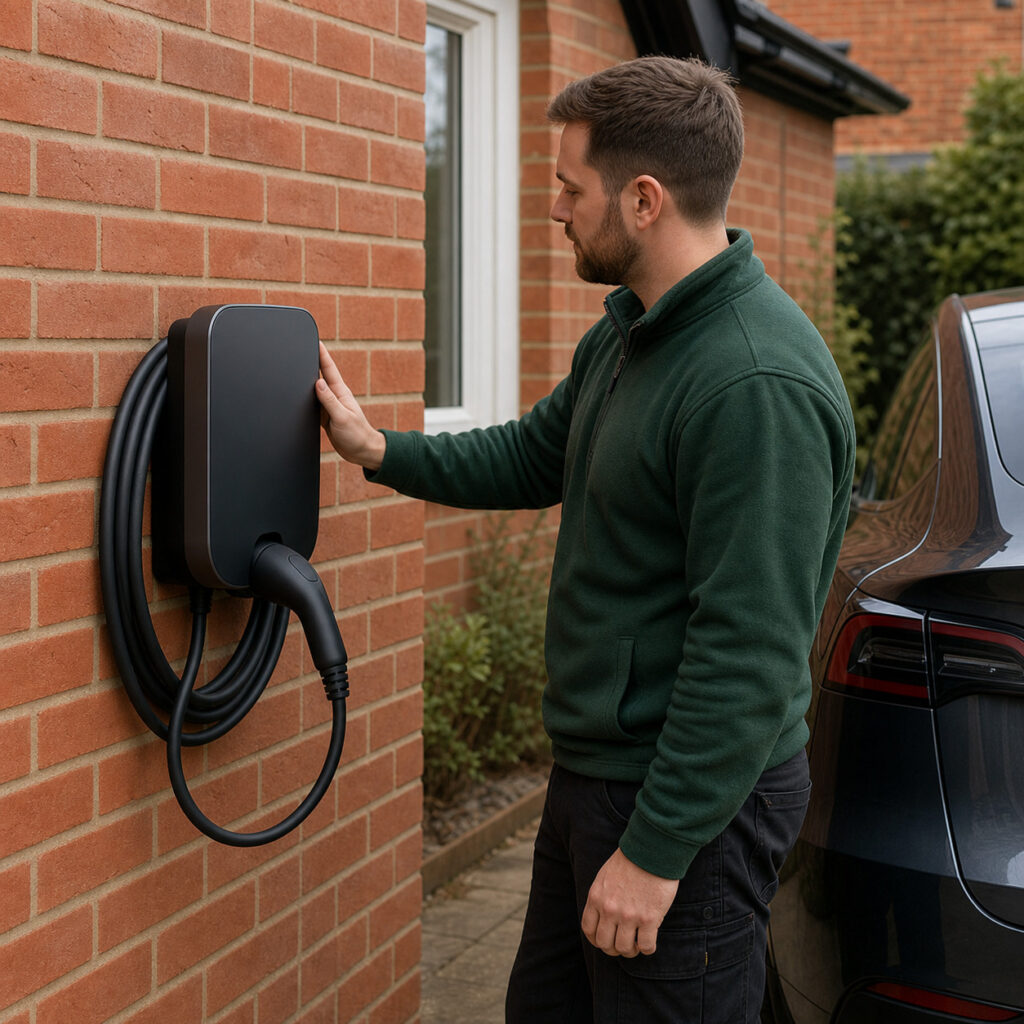
The position of the vehicle is the first practical question. A charger located close to the usual parking space normally keeps cable runs shorter, reduces visual impact and makes charging easier to use every evening. Where a car is parked beside the house, the installer can consider an external wall, garage wall or a suitable post. If the parking area is separated from the property, the route may need more careful planning to protect the cable and avoid creating a trip hazard.
Older homes around Marden may have thick masonry, outbuildings or surfaces that make a direct route impractical. In those situations, the cable route can be planned along a discreet external line, through a garage, or within suitable protective containment. The aim is to keep the installation neat without hiding important access points or making future maintenance difficult. It is also worth considering whether a second vehicle may use the driveway later, because a small change in charger position can make daily cable handling much more convenient.
Homeowners should also think about lighting and visibility around the charging point. A well-positioned charger should be easy to reach after dark, while nearby outdoor lighting should not shine directly into a bedroom or create glare for neighbours. These details are part of a good installation because they affect how confidently the equipment will be used throughout the year.
Check the Electrical Supply Before Choosing the Charger
A charger adds a substantial load to a domestic electrical installation, so the existing supply and consumer unit need to be considered before a model is selected. The assessment should look at the incoming supply, the condition and capacity of the consumer unit, earthing arrangements, cable routes and the way other larger loads operate. Homes with electric heating, an immersion heater, an induction hob or workshop equipment may need a more detailed load assessment than a lightly used property.
That does not automatically mean that an upgrade is required. In many homes, a suitable protection arrangement and a charger with load-management capability can allow charging to take place without creating unnecessary demand at the busiest times. Load management can reduce charging power temporarily when the home is using other appliances, then restore it when capacity becomes available. The important point is that this decision should be based on measurements and the characteristics of the property rather than a guess made from the charger’s headline power rating.
Where the consumer unit is old, crowded or lacks appropriate modern protection, the EV charger installation may be a useful opportunity to address wider safety concerns. Any recommended work should be explained clearly, with separate costs and reasons, so the homeowner can distinguish essential protective measures from optional improvements.
Choose Charging Capacity and Features Carefully
Many drivers do not need the largest charger available. The right capacity depends on the vehicle’s onboard charger, the daily mileage, the parking duration and the available electrical supply. A car that is parked overnight may receive plenty of energy from a lower-power unit, while a household with two EVs or frequent long journeys may benefit from a faster setup if the property can support it.
Smart features can add useful flexibility. Timed charging may allow the vehicle to charge during a preferred period, while app controls can provide a clear view of energy use and charging status. Some homeowners also value solar integration or future compatibility with energy-management systems. These features should be selected for a real household need, not simply because they appear on a specification sheet. Simpler equipment can sometimes be easier to operate and maintain over its working life.
Before installation, it is sensible to confirm where the Wi-Fi signal reaches the parking area if the charger depends on an online connection. A weak signal does not necessarily prevent installation, but it may affect which functions are reliable. The charger should still provide a safe basic charging method if an app or cloud service is temporarily unavailable.
Plan Protection, Cable Routing and Weather Exposure
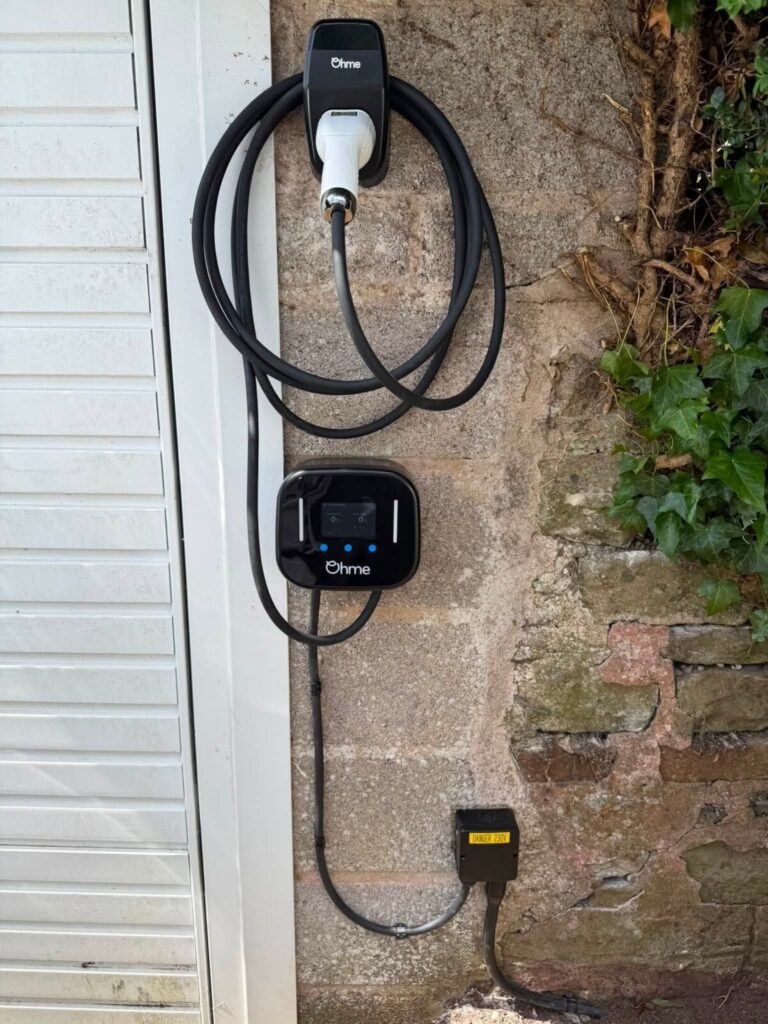
An outdoor charger must be suitable for its environment, with correctly selected protection and a robust method of fixing. The installation should account for rain, frost, accidental knocks and the possibility of water tracking along a cable. Cables should be routed so they are supported, protected from abrasion and kept away from sharp edges. Where a route crosses a vulnerable area, suitable containment can improve both safety and appearance.
It is equally important to plan how the charging lead will be stored. A lead left across a path can be damaged or create a hazard, particularly on a shared drive. A wall-mounted hook, holster or tidy parking position can keep the route clear when the charger is not being used. If the charger is installed on a detached garage or separate structure, the supply route and local conditions need to be assessed as one complete system rather than treated as a simple extension cable.
Good workmanship should leave the consumer unit, isolating arrangements and charger controls accessible for future inspection. Labelling matters too: clear identification helps homeowners and later electricians understand which circuit supplies the charger and how it can be isolated safely.
Arrange a Professional EV Charger Installation in Marden
A reliable installation combines a suitable charger with sound electrical design, careful routing and clear handover information. Before work begins, ask what checks will be carried out, what protection is included, whether the proposed position is practical for your parking routine and what documentation will be provided at completion. A written explanation of how to operate the charger and isolate it in an emergency is useful for every member of the household.
Professional advice can also prevent avoidable changes later. If you are planning other alterations, such as an electrical installation upgrade, new outbuilding supply or driveway work, mentioning these plans early may help coordinate routes and avoid disturbing finished surfaces. Similarly, a wider consumer unit upgrade may be considered where the existing board cannot provide the required protection or space.
For homeowners who want a complete evening setup, it can be useful to coordinate the charger with practical lighting installation around the driveway, garage or access path. The charger and lighting should be planned together so that cable routes remain tidy and the finished area is comfortable to use. With a proper assessment and a carefully installed system, Marden households can charge at home with confidence and make their electrical installation ready for everyday electric vehicle ownership.