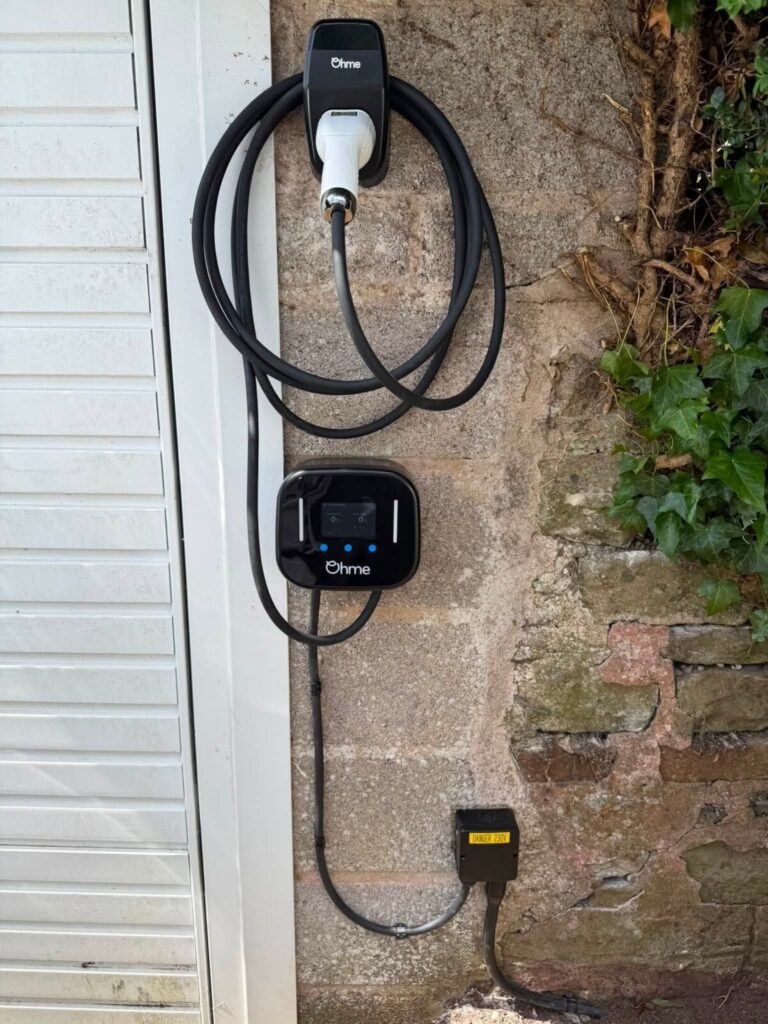



For households in Hentland, an electric vehicle charger can make everyday driving simpler, but a dependable installation needs more thought than choosing a unit and fixing it to a wall. Rural properties often have long drives, outbuildings, older wiring and changing demands from heat pumps, workshops or home offices. A properly planned installation considers the property, the vehicle, the available electrical capacity and how the charger will be used throughout the year.
This guide explains the main decisions for homeowners arranging an EV charger installation in Hentland. It is intended to help you prepare useful information before a survey, understand the work involved and choose a practical solution that remains convenient as your household changes.
Start with the property and parking arrangement
The best charger position is usually close to the regular parking space, but the shortest cable route is not always the right answer. A survey should look at the consumer unit, the proposed cable path, wall construction, external surfaces and the distance between the house and driveway. Hentland properties may include detached garages, stone walls, gravel drives or parking areas that are separated from the main building, so the installation method needs to suit the site rather than rely on a standard layout.
Think about how the car is normally parked and whether a second vehicle may use the same space later. The cable should reach the charge port without crossing a pedestrian route or creating a trip hazard. If the charger is mounted on an outbuilding, the supply route and protection arrangements need careful consideration. Keeping the equipment accessible for maintenance while protecting it from accidental knocks, standing water and avoidable weather exposure will improve its long-term reliability.
Check electrical capacity before selecting the charger
Most domestic chargers are chosen around their charging rate, but the property’s electrical installation must be assessed first. The installer should inspect the consumer unit, earthing arrangement, existing protective devices and the likely demand from other major appliances. A charger can be technically capable of a high output while the home is better served by a managed or lower-rate installation that balances charging with cooking, heating and other loads.
Load management can be particularly useful where a property has an older supply, electric heating or several high-demand appliances. It can adjust the vehicle’s charging rate when household demand rises, reducing unnecessary strain while still making good use of available capacity. If an upgrade to the consumer unit, a new circuit or additional protection is needed, that work should be explained clearly before installation begins. A careful electrical installation assessment helps identify these requirements early.
Choose features that fit real driving habits
A charger should be selected around the way the vehicle is used, not just the highest number on a specification sheet. A driver who returns home each evening and leaves again in the morning may benefit from scheduled overnight charging, while someone with irregular journeys may value simple app controls and clear status indicators. Tethered units are convenient when a cable can remain attached, whereas untethered units can look neater and work with different cable arrangements.
Consider Wi-Fi or mobile connectivity, solar compatibility, tariff scheduling and access controls. These features can be useful, but only when they solve a genuine need. A straightforward charger with reliable controls may be preferable to a complicated system that is rarely configured correctly. Discuss future needs as well: a home that may add solar panels, a second EV or a battery storage system could benefit from an installation that leaves sensible room for later changes.
Plan cable routes, protection and weather resistance
External cable runs should be neat, secure and protected from likely damage. The route may follow a wall, pass through a garage or require carefully positioned containment. On older or character properties, the visual impact matters as well as the electrical function. A route that avoids unnecessary drilling, keeps bends gentle and remains accessible for inspection is usually easier to maintain than one hidden in a difficult-to-reach space.
The charger and its accessories should be suitable for their location, with appropriate protection against moisture, impact and temperature changes. The installation should include the correct protective equipment and clear labelling so that future electrical work can identify the dedicated circuit. Good workmanship includes testing, recording the results and explaining how to isolate the charger safely. These details are as important as the visible unit because they support safe operation long after the initial installation.
Arrange a professional survey and a useful handover
Before booking, prepare details of the vehicle, parking position, approximate cable distance and any known electrical changes at the property. Photographs of the consumer unit and driveway can help an installer understand the layout, although they do not replace an on-site assessment. Ask what is included in the quotation, including containment, drilling, upgrades, testing, certification and any remedial work needed after the survey.
On completion, you should know how to start and stop a charge, set a schedule, check the status lights and respond to a basic fault. Keep the installation documentation and ask where the circuit isolation point is located. If you are also planning other work, such as lighting improvements or wider electrical changes, coordinating the projects can reduce duplicated access work and make the overall plan more coherent.
For Hentland homeowners, the most useful EV charger is one that suits the property, works with daily routines and is installed with enough attention to future needs. A measured survey and clear specification provide a better foundation than choosing solely on charging speed. If you are comparing options, a local electrician can explain the practical route, confirm the electrical requirements and recommend equipment that matches the way you actually use your vehicle. You can also review further EV charger planning considerations before arranging a site visit.
Local planning context for Hentland
Every property has its own access, parking and electrical characteristics. A local assessment can account for the position of the house, garage or driveway and help avoid assumptions based on urban installations. The goal is a tidy, maintainable charging point that is convenient in all seasons and properly integrated with the home’s existing electrical system.