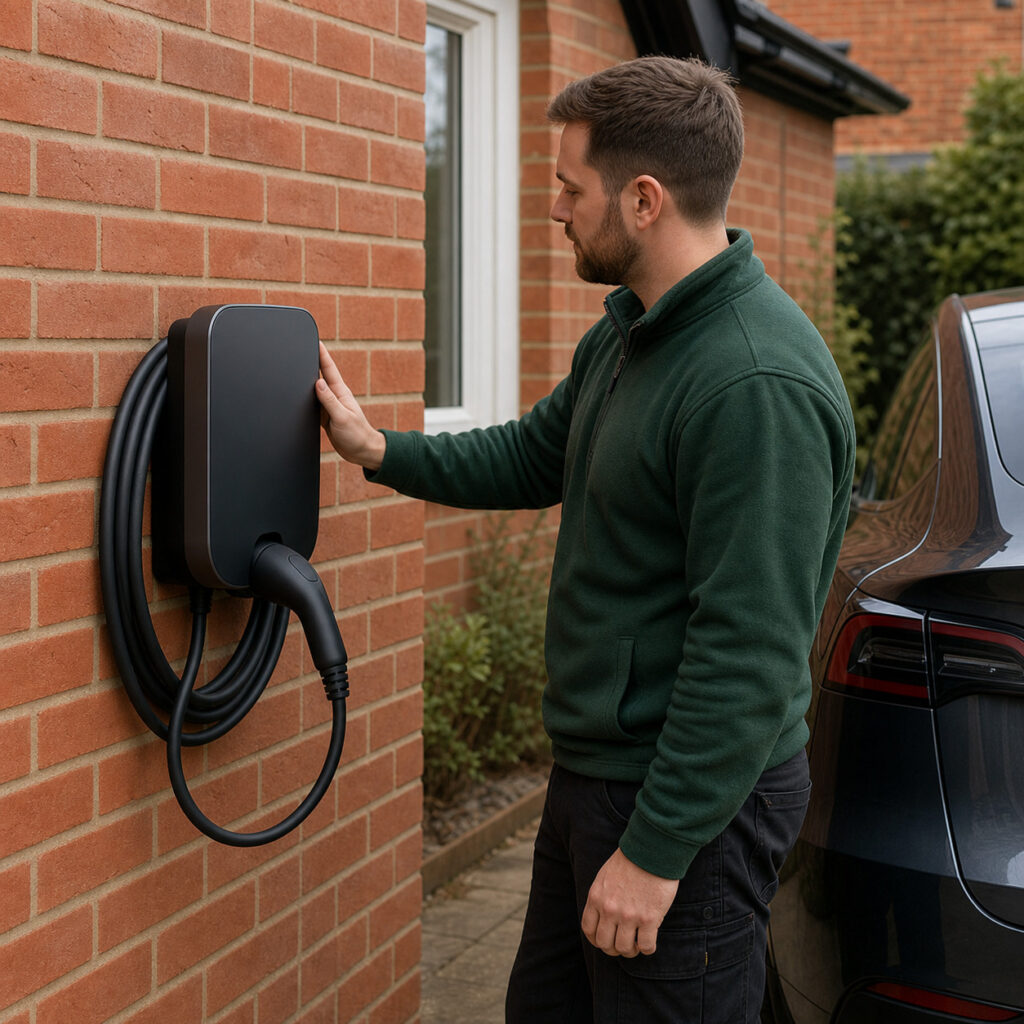



Choosing an electric vehicle is only the beginning of making home charging work well. For households in Walford, an EV charger should be planned around the property, the existing electrical installation and the way the vehicle is used each day. A professionally installed charger can make charging straightforward and predictable, while a rushed installation may create awkward cable routes, inconvenient parking arrangements or unnecessary pressure on the consumer unit.
This guide explains the main decisions homeowners should consider before arranging an EV charger installation. It covers the initial survey, power requirements, cable positioning, safety checks and the practical details that help a new charging point fit naturally into a rural or village property.
Start with a proper electrical assessment
The first stage is an inspection of the existing supply rather than choosing a charger from a catalogue. An electrician can assess the consumer unit, earthing and bonding, protective devices, available capacity and the condition of the cable route to the proposed charging position. Older homes may have had extensions, outbuildings or alterations over time, so the installation should be considered as one complete system.
A survey also identifies where additional protection may be needed and whether the charger can be connected directly to the current arrangement. If the consumer unit is crowded, outdated or showing signs of wear, an upgrade may be sensible before the charging point is fitted. Our electrical installation guidance explains why careful planning matters when household demand is changing.
Choose charging power around real usage
Home chargers are available with different output levels, but the highest rating is not automatically the best choice. The right option depends on the vehicle, the daily mileage, the time the car is normally parked and the capacity of the home’s supply. A driver who returns home every evening may value a faster unit, while someone who charges overnight may achieve everything needed with a lower output.
It is useful to think in terms of routine rather than advertised speed. Consider weekday journeys, weekend trips, visitors, and whether another electric vehicle may be added later. A charger with sensible load management can help balance vehicle charging with cooking, heating and other high-demand appliances, reducing the risk of nuisance tripping during busy periods.
Plan the cable route before work begins
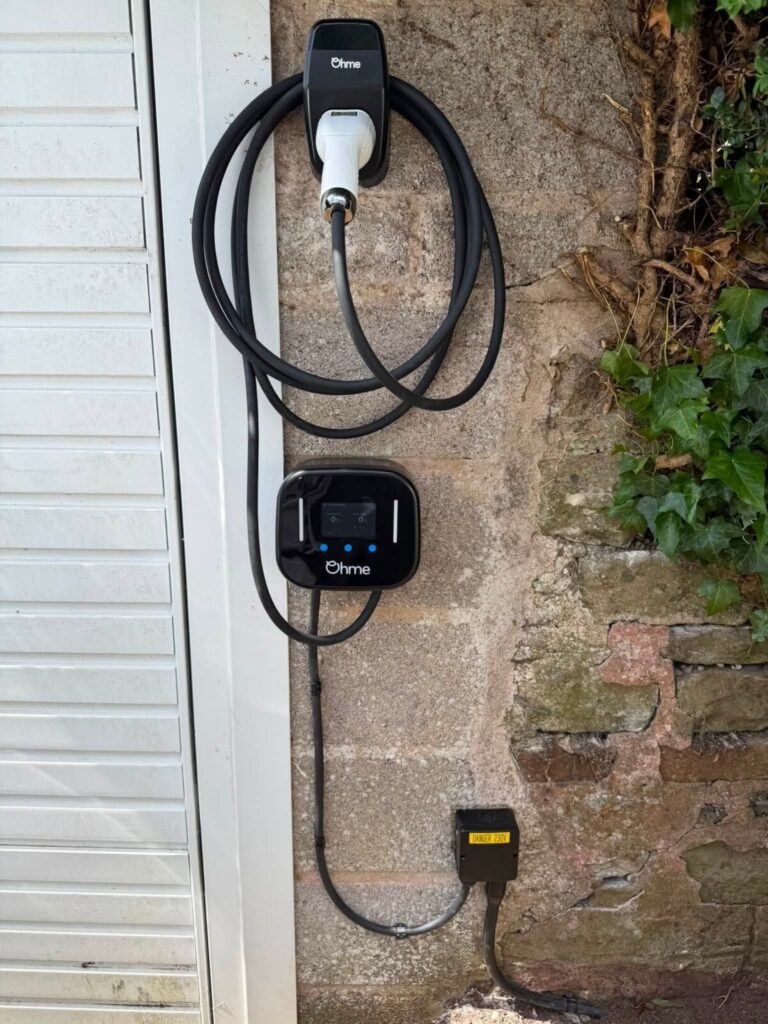
The position of the parking space is often the most important practical decision. The charger should be accessible without leaving the cable across a footpath, doorway or regular walking route. On properties with a detached garage, driveway wall or parking area away from the house, the cable route may need to pass externally or through an outbuilding.
Good cable planning keeps the installation neat and protects the cable from avoidable impact, moisture and gardening equipment. It also leaves enough reach for the vehicle’s charging socket without creating a permanent loop on the ground. Where a route passes through masonry or follows an outside wall, the finish should be weather-resistant and visually appropriate to the property.
Safety features and day-to-day reliability
Modern EV chargers include important safety functions, but they still depend on correct installation and suitable protection upstream. The electrician should confirm that the protective devices, isolation arrangements and earthing provisions match the chosen charger and the characteristics of the vehicle. Testing at completion provides confidence that the circuit operates as intended.
Reliability also comes from small details: a secure mounting surface, a sensible height, clear status indicators and a location that is protected from accidental knocks. If the charger connects to an app or home network, the signal should be considered during planning rather than treated as an afterthought. A simple, dependable setup is usually more valuable than features that will rarely be used.
Coordinate the charger with wider home improvements
An EV charger is one part of a home’s electrical demand. If you are already planning lighting changes, an extension, electric heating or other significant work, it may be efficient to review the overall installation at the same time. Coordinating projects can reduce duplicated disruption and make it easier to plan spare capacity for future needs.
It is also worth checking whether outdoor lighting, sockets or garden buildings share the proposed route or protective equipment. Our lighting installation guidance shows how thoughtful positioning and circuit planning can improve outdoor usability while keeping the work tidy. For broader preparation, our electrical installation planning advice covers the value of reviewing future demand before making changes.
What to expect from a professional installation
A well-managed installation normally starts with a survey and a discussion about how the vehicle will be used. The electrician then confirms the charger position, cable route, protection and any required alterations before agreeing the work. On installation day, the equipment is mounted securely, connected, tested and explained so that everyone in the household knows how to use it safely.
For Walford homeowners, the best result is a charging point that feels like part of the property rather than an add-on. By considering supply capacity, parking habits, future demand and the finish of the cable route together, you can make a confident decision and enjoy convenient home charging for years to come.