


Installing an electric vehicle charger at home is a practical upgrade, but the best result comes from planning the complete electrical installation rather than choosing a charger in isolation. Homes around Kingsthorne can vary considerably in age, layout, driveway position and available electrical capacity, so a site-specific assessment is important before work begins. A tidy installation should make charging convenient today while leaving the property safe, accessible and adaptable for future needs.
Start with the Property and Charging Routine
The right charger location is usually determined by how the household actually uses its vehicles. Consider where the car is parked overnight, whether the cable can reach the charge point without crossing a public path, and how the driveway is used by visitors or other vehicles. A short cable route is generally easier to protect and maintain, while a longer route may require more careful containment and additional planning around walls, gates and outbuildings.
It is also useful to discuss typical mileage, charging times and whether more than one electric vehicle may be added later. A home that mainly charges overnight may not need the same configuration as a household that needs rapid top-ups between journeys. These practical details help an installer recommend a suitable unit, cable arrangement and control approach without oversizing the system unnecessarily.
Check the Existing Electrical Capacity
Before installing a charger, the incoming supply, consumer unit and earthing arrangements should be assessed. The installation must be coordinated with existing demand from appliances such as electric showers, heat pumps, cookers and immersion heaters. A property with an older board or limited spare capacity may need preparatory electrical work before a charge point can be added safely.
Load management can be valuable where several high-demand appliances operate at the same time. A compatible charger can monitor household demand and adjust its charging rate, helping to reduce the risk of nuisance tripping and making better use of the available supply. This should be designed around the actual installation rather than treated as a substitute for checking the condition and suitability of the existing equipment.
Choose a Suitable Charger Position
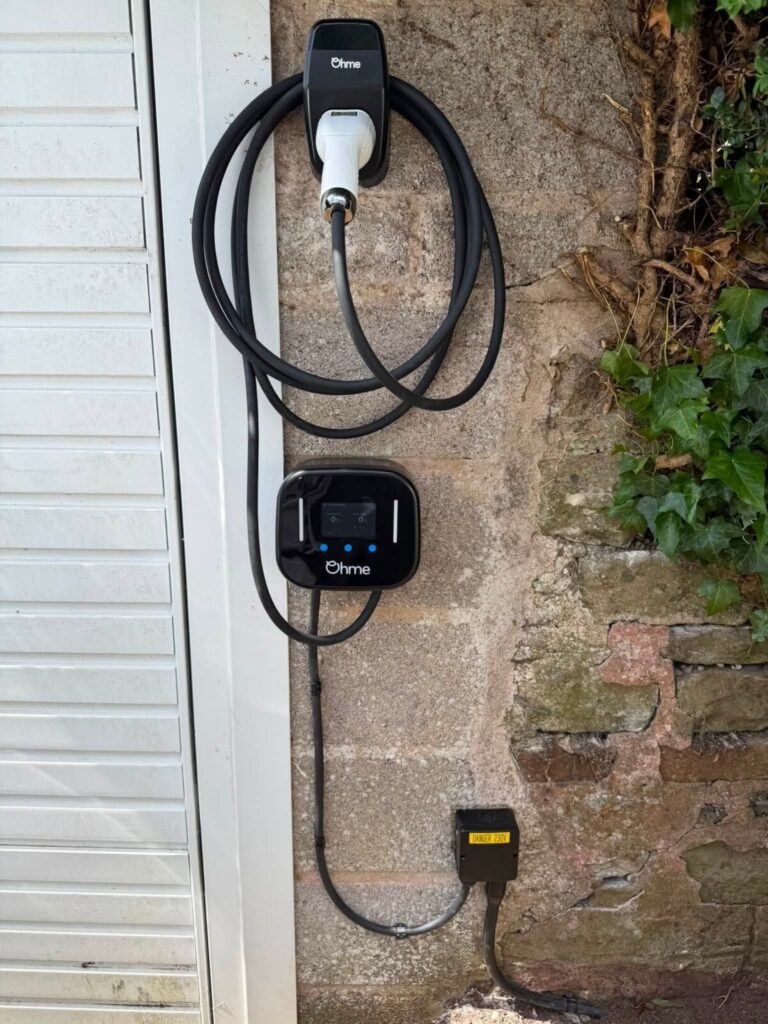
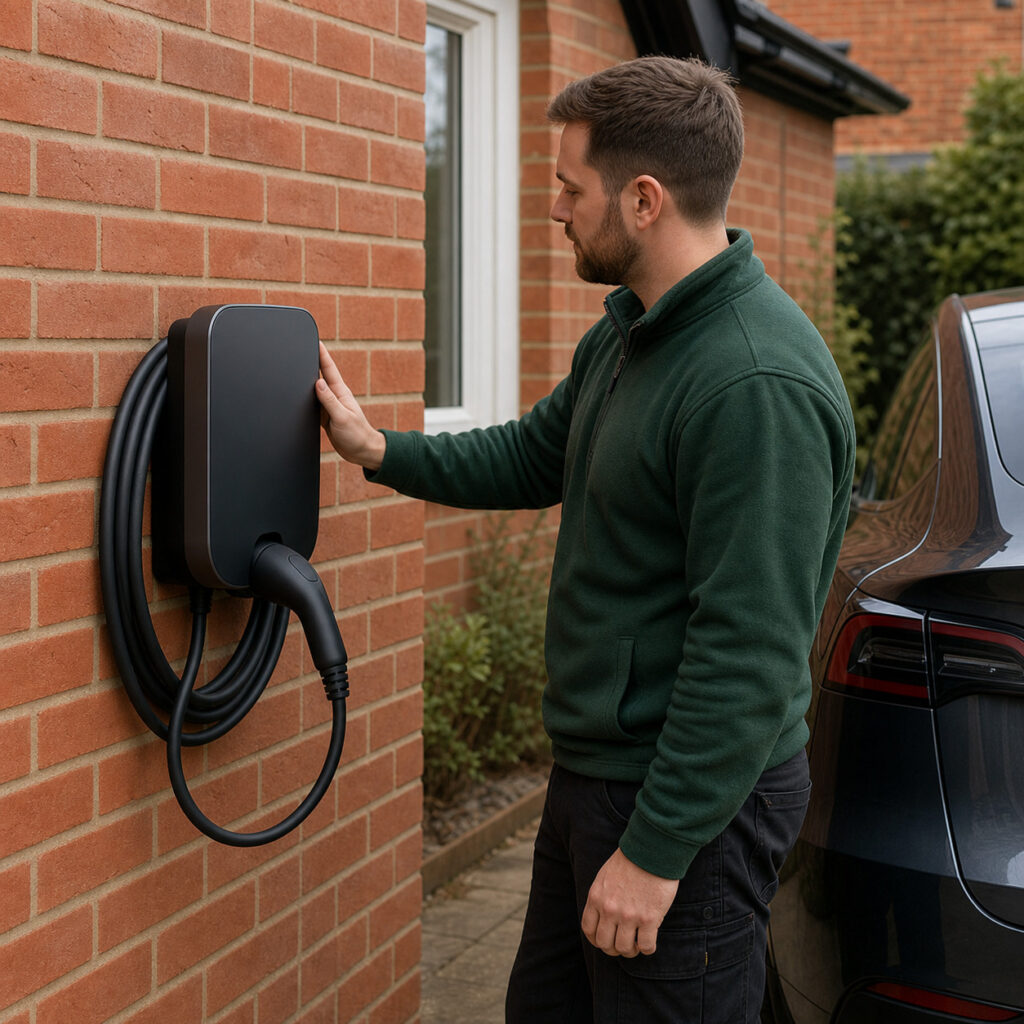
A charger should be positioned where it is easy to connect, protected from avoidable impact and accessible for future servicing. Wall mounting is often neat and space-efficient, while a dedicated post can be useful when the parking area is away from the house or the wall is unsuitable. The position of the vehicle inlet, cable storage and any pedestrian route all matter when deciding the final height and orientation.
Outdoor equipment also needs protection from weather and accidental damage. Cable routes should be planned so that they do not create snagging points or encourage the cable to be left across a walkway. Neat containment, carefully sealed penetrations and a sensible route through the property can make a noticeable difference to both appearance and long-term reliability.
Plan the Cable Route Carefully
The route between the distribution board and charger affects cost, appearance and performance. Internal routes may pass through cupboards, garages or utility areas, whereas external routes may need suitable conduit or armoured cable. Each option should be considered in relation to wall construction, insulation, drainage, landscaping and any future building work.
Where the cable passes through a wall, the entry point should be protected against moisture and finished cleanly. Long runs may require attention to voltage drop and mechanical protection, particularly where the route crosses exposed areas or approaches a detached garage. Good preparation reduces the likelihood of later remedial work and helps the finished installation blend into the property.
Safety, Testing and Everyday Use
EV charging equipment should be installed, tested and documented by a competent electrician using equipment appropriate to the charger and the property. Protective devices, earthing, isolation and the charger’s built-in safety functions all need to work together. Testing should cover the complete circuit, not simply whether the vehicle begins charging.
Once commissioned, the homeowner should know how to isolate the charger, interpret basic status indicators and report unusual behaviour. A clear handover is especially helpful when the charger has app controls, scheduled charging or load-balancing features. Keeping the installation information available can also make future maintenance or vehicle changes more straightforward.
Prepare for Future Electrical Changes
A well-planned charger installation can support wider improvements to the home. If solar panels, battery storage, a heat pump or another electric vehicle may be added later, it is worth discussing those possibilities before the cable route and protective equipment are finalised. Planning ahead does not mean installing every future feature now, but it can avoid unnecessary disruption and help preserve useful capacity.
For households reviewing the wider electrical condition of a property, our electrical installation service can help identify related work. If the main priority is selecting and fitting a charger, see our EV charger installation service. Homes also considering energy-efficient improvements may benefit from reviewing our lighting installation service as part of a broader upgrade plan.