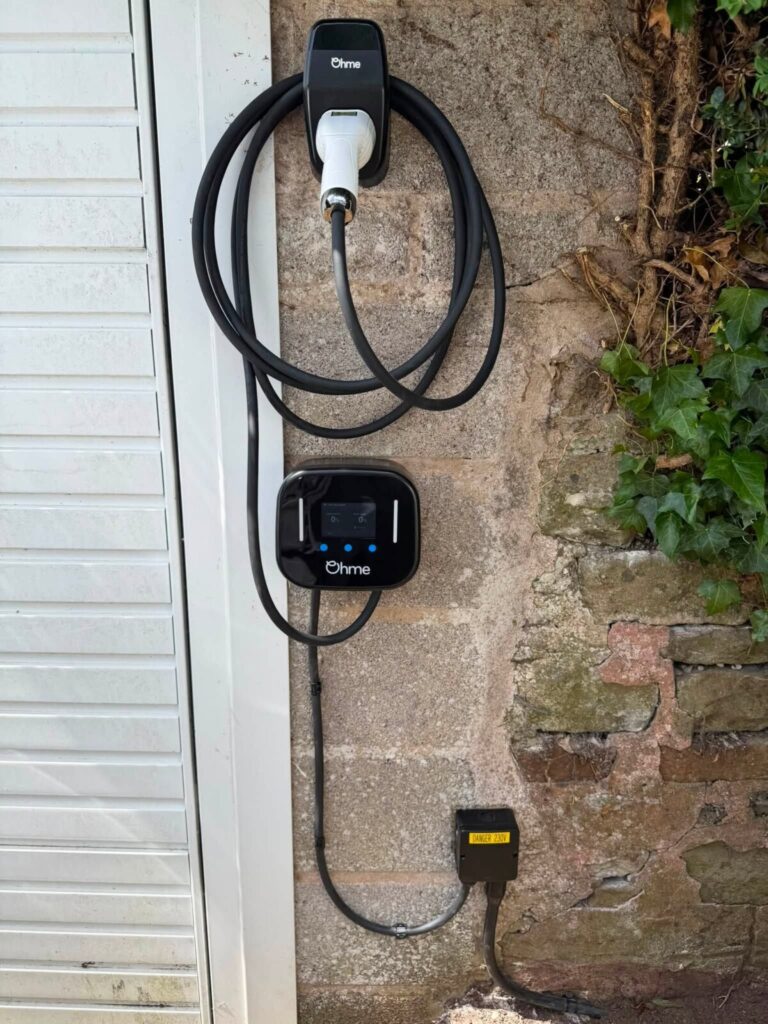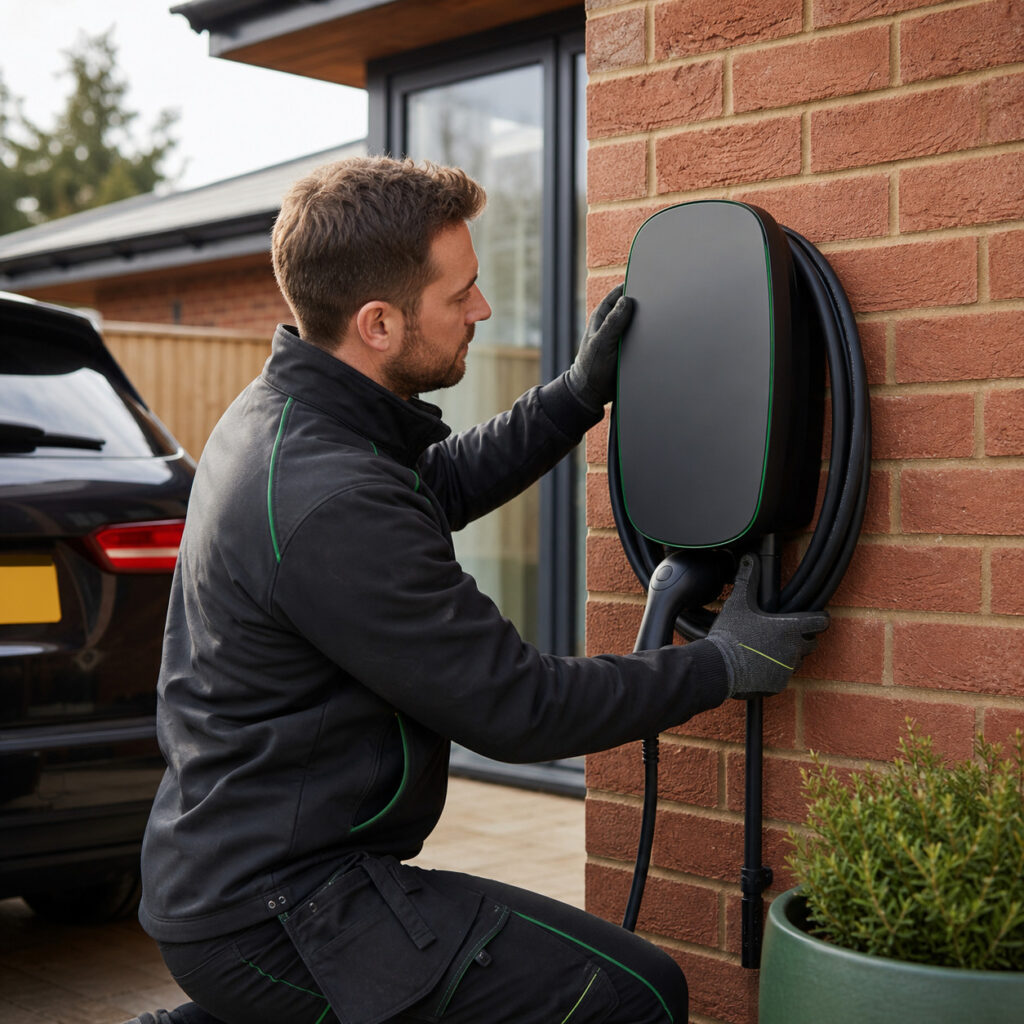



A dedicated home EV charger gives drivers in Cinderford a convenient and reliable way to recharge between journeys. Purpose-designed charging equipment can provide scheduled charging, energy monitoring and demand management while avoiding regular reliance on a standard household socket.
The installation needs to suit the vehicle, the property’s electrical capacity and the usual parking arrangement.
Choosing a practical charger
Home chargers vary in power rating, cable arrangement and connectivity. A tethered model keeps its charging lead attached and ready for use, while an untethered unit allows the cable to be stored separately.
Smart features may provide scheduling, usage reports and app-based controls. The right charger should match the household routine and vehicle requirements while remaining compatible with the available electrical supply.
Assessing the existing installation
Before work begins, the incoming supply, earthing arrangements, consumer unit and proposed cable route should be assessed. The charger usually requires a dedicated circuit with cables and protective devices selected for its load and installation conditions.
If the distribution board is dated, full or unsuitable for the new circuit, a consumer unit upgrade may be recommended. Establishing this at the survey stage helps create a clear plan and realistic scope of work.
Positioning the charger safely
The charging lead should reach the vehicle’s inlet without being stretched across a path, doorway or shared access. Wall construction, likely vehicle movement, exposure to impact and access for future maintenance all influence the best position.
The cable route back to the supply should be practical and protected. Outdoor equipment and connections must be suitable for local weather exposure and foreseeable physical damage.
Managing electrical demand
Some smart chargers can adjust their output according to the electricity being used elsewhere in the home. This load-management function helps keep total demand within the capacity of the supply when other high-power appliances are operating.
Scheduling can also allow drivers to charge during a preferred tariff period. Customers should receive clear guidance on the app, charger indicators and normal everyday operation.
Lighting the charging area
Useful lighting can make connecting the vehicle easier during dark mornings and evenings. Sensor-controlled wall lights or a wider driveway scheme may be coordinated with the charger if access around the parking space needs improvement.
Professional lighting installation considers beam direction, brightness and controls so the space is practical without causing excessive glare. External fittings also require suitable weather protection.
Addressing existing electrical faults
Flickering lights, warm accessories, intermittent power or protective devices that operate unexpectedly should be investigated before a charging circuit is added. These symptoms may indicate damaged equipment, loose connections or wiring defects.
Professional electrical fault finding can identify the cause and establish whether remedial work is needed. Resolving existing issues first helps create a dependable foundation for the charger.
Installation and handover in Cinderford
Once the charging point is installed, its circuit and protective measures should be inspected and tested. Clear labelling and operating information help customers use the equipment confidently and recognise when professional support may be required.
RP Electrical Installation can assess homes in and around Cinderford, discuss appropriate EV charger options and plan a tidy route from the supply to the parking area.
Arrange an EV charging assessment
An on-site assessment allows supply capacity, charger positioning, cable routing and smart features to be considered together. This provides a sound starting point for a charging installation designed around the property and the driver’s needs.