


For households in Brampton Abbotts, an electric vehicle charger can make everyday driving simpler, more predictable and less dependent on public charging points. A properly planned installation gives you a convenient place to charge overnight while making sure the electrical system, cable route and outdoor equipment are suited to the property. The most successful projects begin with a practical assessment rather than choosing a charger from a catalogue and hoping it will fit.
Start with the way your household charges
Think about when the vehicle is normally parked, how many miles are covered in a typical week and whether another electric vehicle may be added later. Many drivers can comfortably recharge overnight, so a dependable home unit is often more useful than chasing the highest possible charging speed. A discussion about daily routines also helps determine whether the charger belongs beside the driveway, on a garage wall or in another accessible position.
The location should be convenient without creating a trip hazard or leaving a cable across a pedestrian route. On properties with a longer drive, the best position may be close to the parking space rather than beside the consumer unit. A survey can identify whether the cable can be routed neatly through the building, around an exterior wall or within suitable protective containment.
Check the existing electrical supply
An EV charger is a significant additional load, so the installation should be considered alongside the rest of the home’s electrical demand. The age and condition of the consumer unit, the arrangement of existing circuits and the available supply capacity all influence the final design. A qualified electrician can check whether protective devices, earthing and bonding arrangements are appropriate before any new circuit is installed.
This is also a useful moment to discuss future plans. If you are considering an extension, electric heating, solar panels or a second charger, allowing for those possibilities can avoid unnecessary alterations later. The right solution may include load management so that the vehicle charges safely while the home continues to use other appliances without placing avoidable strain on the supply.
Where an upgrade or additional protection is recommended, the work should be explained clearly before installation begins. Good preparation makes the project easier to budget and reduces the chance of discovering that the preferred charger cannot be used at the chosen location.
Choose a charger that fits the property
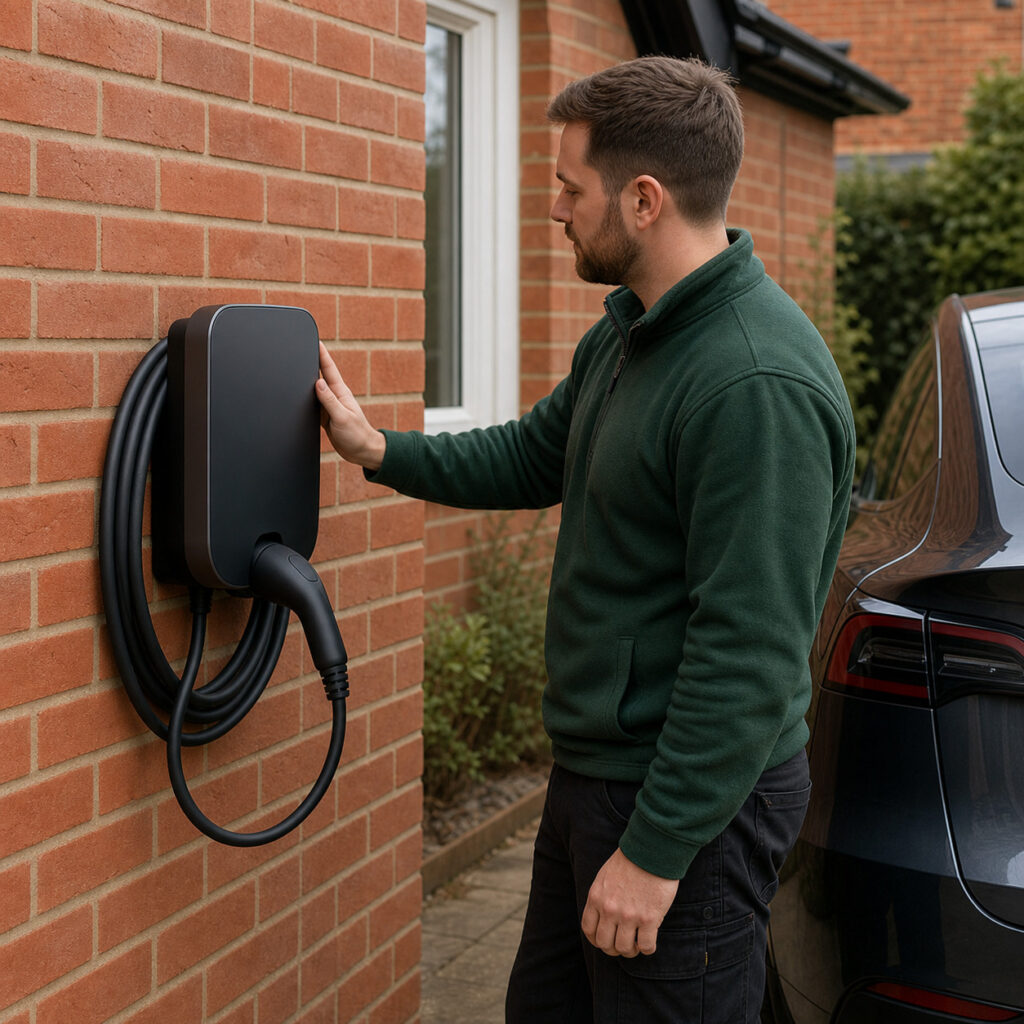
Charger selection is about more than maximum output. The unit should be compatible with the vehicle, suitable for its environment and practical for the people using it. Tethered models can be convenient because the cable is always ready, while untethered units may offer a tidier appearance and greater flexibility if vehicles change over time. Smart features can be helpful when they provide useful scheduling or energy monitoring rather than adding complexity that will rarely be used.
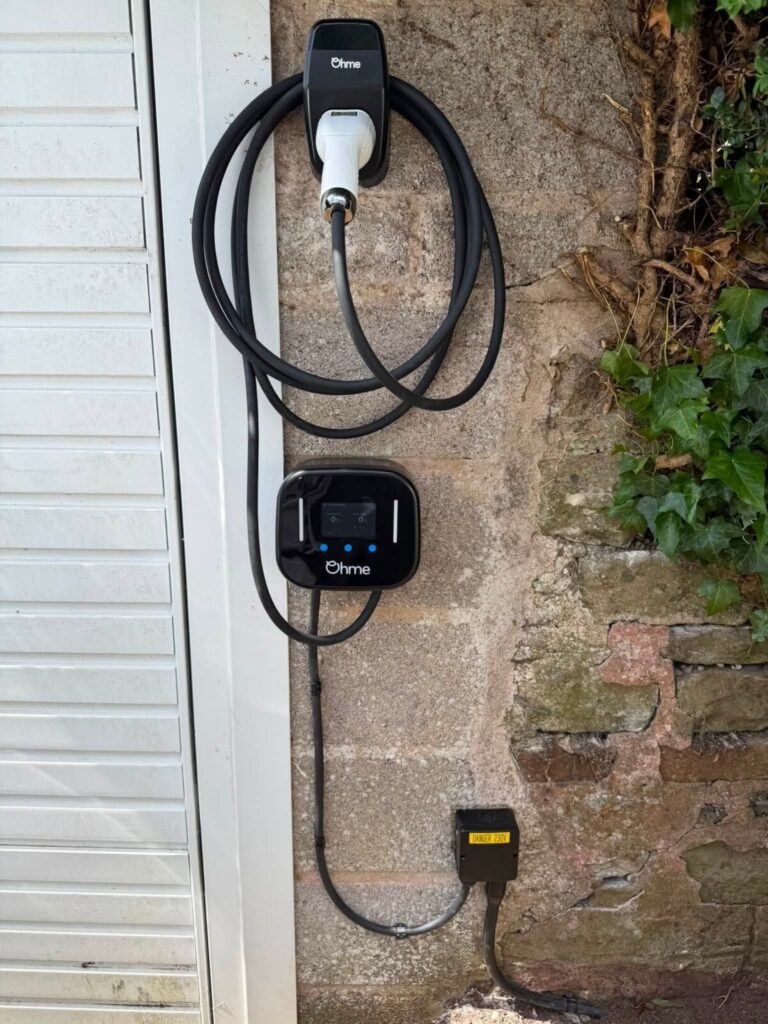
For an exposed driveway, look at weather resistance, cable storage and the visibility of the display or status lights. On a rural or older property, the appearance of the equipment and the route of the cable may matter as much as the specification. A careful installer can position the unit so that it is easy to reach while keeping the finish in proportion with the building.
Plan the cable route and protection
A neat cable route protects the installation and helps it look like part of the property rather than an afterthought. Cables should not be left vulnerable to vehicle movement, garden tools or repeated bending. Where a route passes outdoors, the containment and fixings need to be appropriate for rain, temperature changes and the surface they are attached to.
Older homes and outbuildings can present unexpected details, including thick masonry, suspended floors and concealed services. Discussing the route in advance gives you a chance to choose between a visible but tidy approach and a more involved concealed installation. The same principle applies to the charger position: a small adjustment can sometimes produce a much safer and cleaner result.
If you are comparing this work with wider electrical installation planning, the useful question is how each improvement will work together. Coordinating related work can reduce duplicated access, drilling and making-good.
Make safety and compliance part of the design
Domestic EV charging equipment should be installed, tested and documented by a suitably qualified electrician. The final arrangement needs appropriate protective measures for the charger and the rest of the home, with testing carried out before the vehicle is connected for regular use. Clear instructions should cover how to start and stop charging, what indicator lights mean and what to do if the unit reports a fault.
It is wise to keep the installation information with other household electrical records. If the property is sold, the documentation helps a future owner understand the equipment and its maintenance needs. If you are already reviewing the condition of the supply, an electrical installation advice visit can help identify wider concerns that should be addressed alongside the charger.
Prepare for dependable everyday use
Once the charger is installed, small habits can make the system easier to live with. Set a charging schedule that matches your routine, keep the connector clean and avoid placing the cable where it can be driven over. If the unit has an app, make sure more than one household member knows how to use the essential controls. Smart functions should support your routine, not make a simple overnight charge feel like a technical project.
Future servicing is easier when the isolator, protective devices and charger remain accessible. If you notice repeated interruptions, unusual heat, physical damage or a persistent fault message, stop using the equipment and arrange professional advice. Do not attempt to open the charger or alter its protective devices yourself.
For households also improving lighting around a driveway, garage or entrance, lighting installation planning can be considered at the same time. Good lighting improves visibility around the charging point and can make plugging in safer during winter evenings.
Arrange an installation that suits Brampton Abbotts
A home EV charger should be selected around the property, the vehicle and the household’s real pattern of use. A site assessment can confirm the supply arrangements, agree a sensible cable route, identify any extra protection required and produce a clear plan for the finished installation. Taking those steps before equipment is ordered gives you confidence that the charger will be convenient, safe and visually well resolved.
For Brampton Abbotts homeowners, the aim is a reliable charging point that quietly fits into daily life. With thoughtful planning and competent installation, charging at home becomes a straightforward part of owning an electric vehicle rather than another job to manage.