


For drivers in Llangrove, home charging can make electric vehicle ownership far more convenient, especially when daily journeys begin on rural roads and dependable public charging cannot always be guaranteed. A properly planned home charger gives you a predictable place to recharge overnight while helping you make better use of your vehicle’s battery and charging schedule. The installation is more involved than simply fixing a unit to an outside wall, however. Cable routes, consumer-unit capacity, earthing, protection, parking arrangements and future energy use all need to be considered together.
A good installation should feel like a natural part of the property rather than an afterthought. That means choosing a sensible position for the charger, protecting the cable from unnecessary strain, and making sure the electrical work is documented and tested. Whether you are replacing a petrol car, adding a second vehicle or preparing a new-build home for electric transport, a local assessment can turn a general idea into a safe and practical plan. The wider EV charger installation service can be shaped around the actual layout of your Llangrove property.
Assessing the electrical supply before installation
The first stage is to understand how the existing electrical installation will cope with a dedicated charging load. A modern charger can draw substantially more current than everyday sockets, so the installer should inspect the consumer unit, main switch, protective devices, earthing arrangements and the route available for a new circuit. Older properties may have limited spare capacity, dated wiring or a consumer unit that would benefit from improvement before a charger is added.
This assessment is also an opportunity to discuss how the charger will work alongside other high-demand equipment. Heat pumps, electric showers, immersion heaters, workshops and storage heaters can all affect the available capacity at different times. Load management may help prevent unnecessary peaks by adjusting charging power when the rest of the home is using electricity. Where an upgrade is appropriate, related electrical installation work should be planned as part of the same project so the finished system is coherent and easy to maintain.
Choosing a suitable charger position in Llangrove
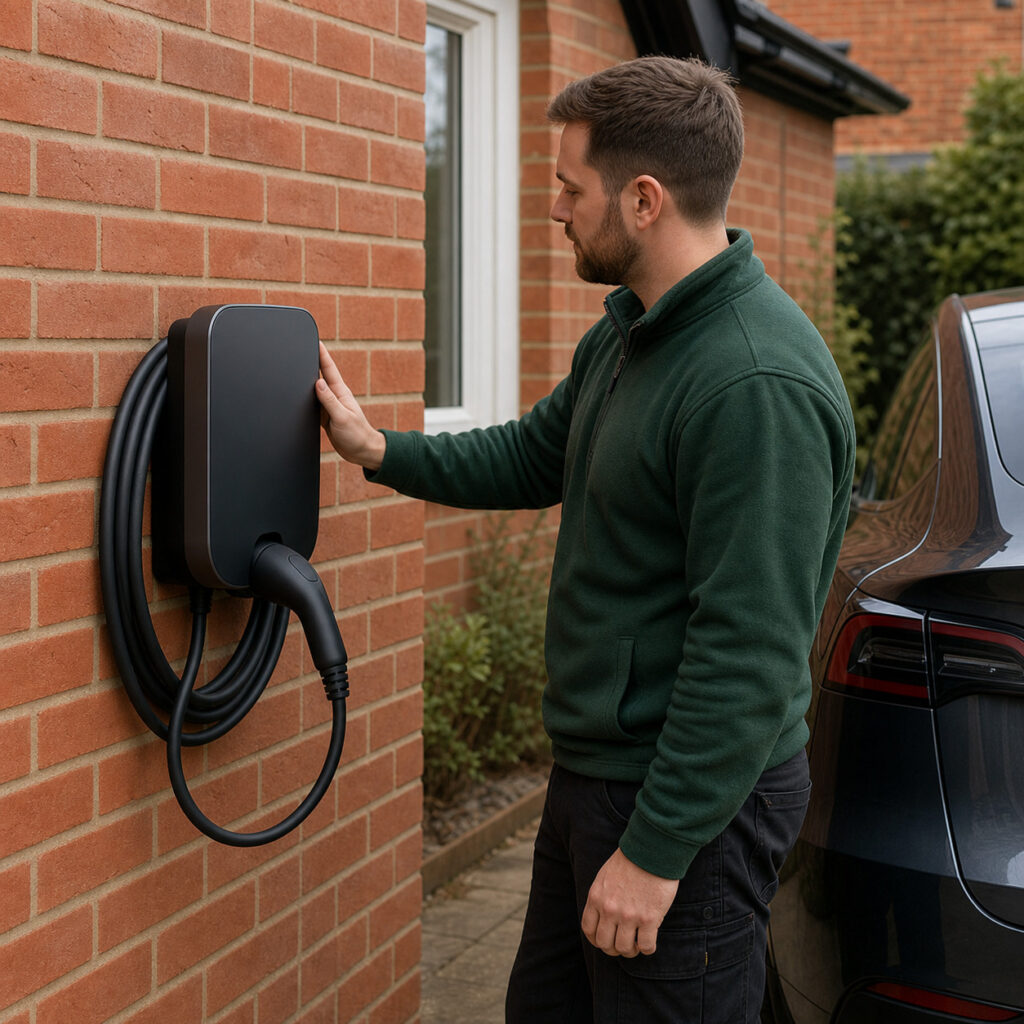
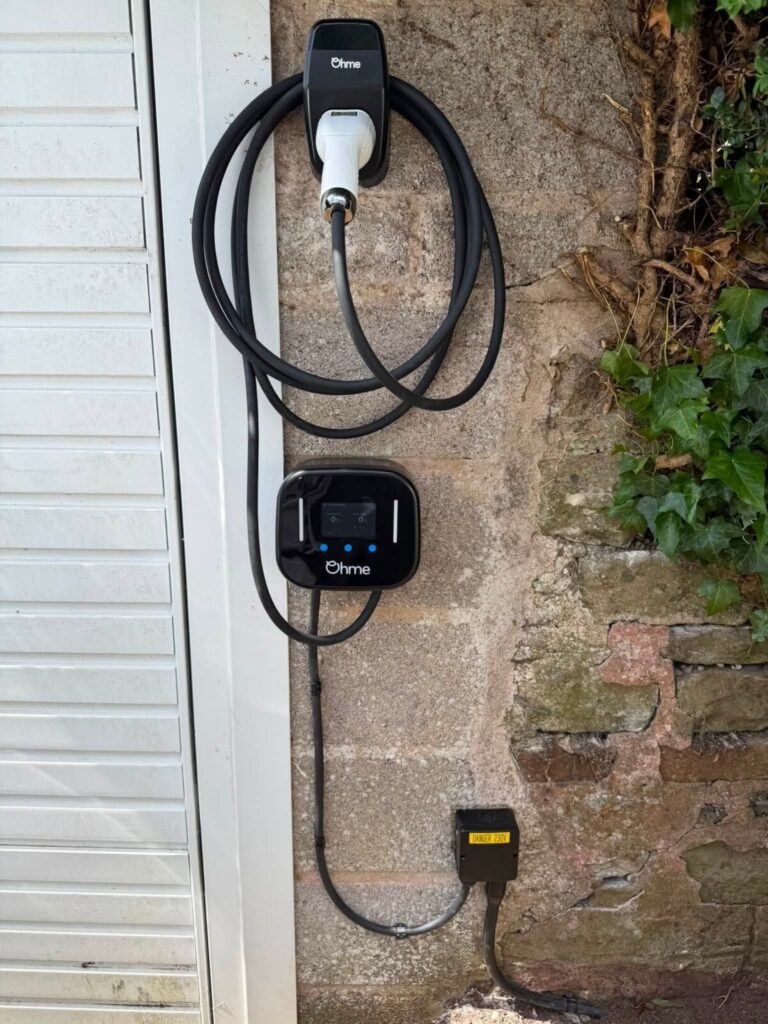
Placement affects convenience, appearance and long-term durability. The ideal location is usually close enough to the regular parking space for the cable to reach comfortably, but not so exposed that vehicles, gates, livestock or garden work can damage it. A wall-mounted unit can work well on a garage or side elevation, while a carefully installed post may be more suitable where parking is set away from the house. The cable route should be neat, protected and accessible for future inspection.
It is worth considering how the property may be used in several years’ time rather than positioning the charger only for today’s vehicle. Leave enough flexibility for a different charge-port location, a second vehicle or changes to the driveway. The charger should be mounted at a practical height, away from standing water and obvious impact points, with enough clearance to operate controls and read status indicators. Good positioning reduces daily frustration and helps the equipment remain presentable in a rural setting.
Protection, controls and everyday charging habits
EV charging equipment needs the correct protective measures for the charger and the cable supplying it. The precise arrangement depends on the unit selected and the characteristics of the property, so protection should be specified by the installer rather than copied from another installation. Testing should confirm that the circuit, connections, earthing and protective devices operate as intended. Any required certification and handover information should be kept with the home’s electrical records.
Smart controls can make charging easier to manage. Timers and apps may allow a vehicle to charge during preferred tariff periods, while solar integration can help a household use more of its own generation when conditions allow. These features are most useful when the underlying installation is dependable and the homeowner understands the settings. It is sensible to agree how updates, connectivity and manual override will work before the installer leaves, so charging is still straightforward if an app or broadband connection is temporarily unavailable.
Planning for a safe, durable installation
Before work begins, confirm the charger specification, cable route, proposed protection, mounting position and any remedial electrical work. Ask how surfaces will be made good, how cables will be protected outdoors and what documentation will be supplied at completion. A clear quotation should distinguish the standard installation from possible extras, such as a longer cable run, trenching, consumer-unit improvements or work across a detached garage.
Once installed, keep the area around the charger clear and check periodically for visible damage, loose fittings or unusual heat. Do not use extension leads or improvised adapters with a dedicated charging setup. If the charger trips repeatedly, shows a fault or the cable becomes damaged, stop using it and arrange an inspection. Broader electrical fault-finding support can help identify whether an issue is limited to the charger or indicates a wider problem in the property.
For Llangrove homeowners, the most valuable result is a charging point that is safe, convenient and suited to the way the household actually lives. Careful design at the start avoids awkward cable routes and unexpected electrical work later, while proper testing and clear handover information make the system easier to use with confidence. A considered local installation can provide dependable overnight charging now and leave the home better prepared for future electric vehicles and changing energy needs.