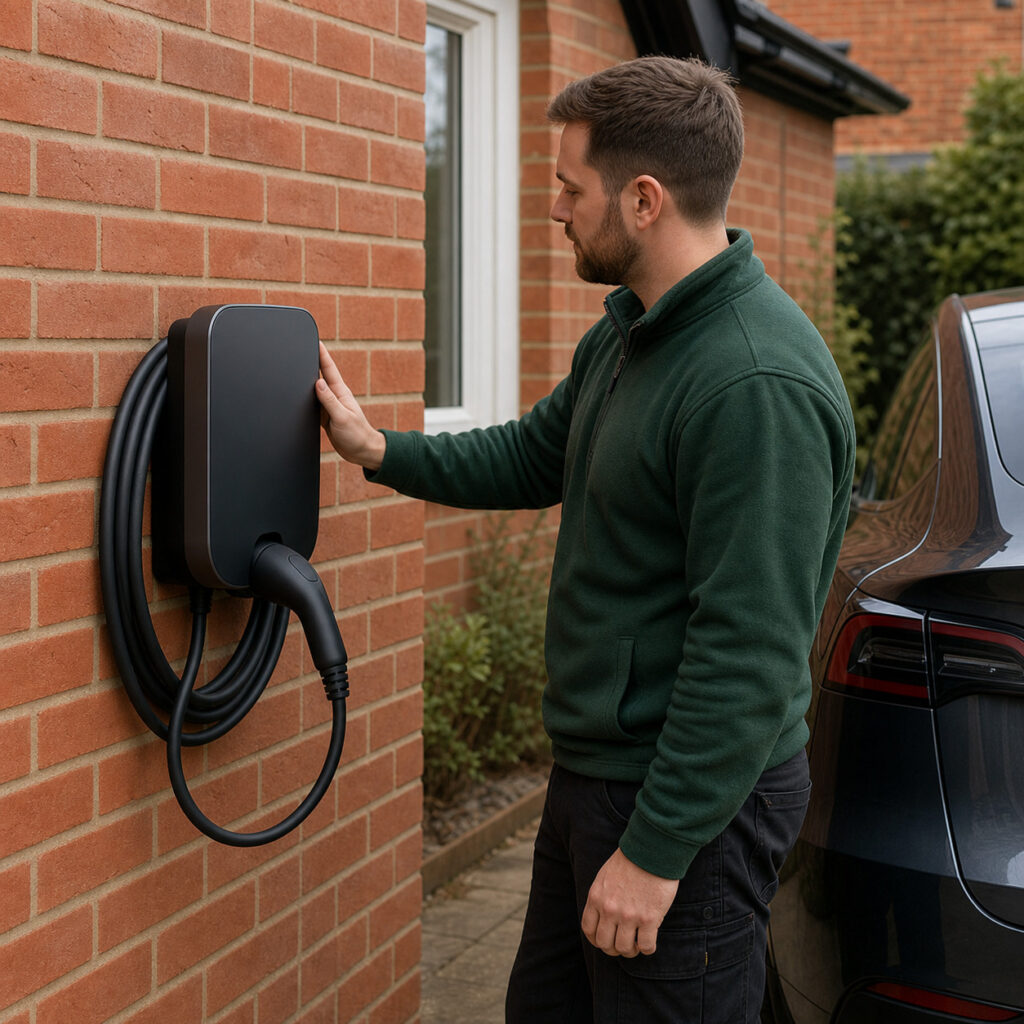



For households in Welsh Newton, an electric vehicle charger can make daily driving simpler, more predictable and less dependent on public charging points. A properly planned installation gives the car a dependable overnight supply while keeping the charger, cable route and wider electrical system safe. The best result comes from treating the charger as part of the property rather than as an isolated box fixed to an outside wall.
Homes around Welsh Newton can vary considerably, from compact village properties to larger rural houses with long drives, outbuildings and older wiring. That variety matters. The distance between the consumer unit and parking space, the construction of the building, the available supply capacity and the position of existing circuits all influence the right installation approach. Early advice helps avoid awkward cable runs and unnecessary changes later.
Start with a Practical Welsh Newton Site Assessment
A useful assessment begins with how the property is actually used. The installer should look at where the vehicle normally parks, whether more than one car may need charging, and how easy it will be to reach the connector without creating a trip hazard. A charger placed close to the usual parking position is convenient, but it must also be protected from accidental impact and positioned so that the cable does not cross a public footway or obstruct gates.
The existing consumer unit and incoming supply also deserve careful attention. Older homes may need improvements before a new high-load circuit can be added, while rural properties may have long cable routes or separate buildings that require a considered design. A professional electrical installation assessment can identify earthing, bonding, protective-device and cable-sizing requirements before work begins.
It is also sensible to discuss future needs at this stage. A household that currently owns one small EV may later add a second vehicle, solar generation or a battery system. Allowing for sensible expansion can be more cost-effective than replacing an undersized arrangement after the driveway and walls have already been finished.
Choose Charger Capacity and Position Carefully
Charger selection should reflect the vehicle, the home’s electrical capacity and the owner’s routine. A faster unit is not automatically the best choice if the car is parked overnight and the property has limited available capacity. Conversely, a household with high mileage may benefit from a higher-rated charger, provided the supply and protective arrangements support it. Smart charging can help schedule demand for suitable periods and reduce unnecessary strain on the home’s peak electricity use.
Positioning affects everyday usability as much as the charger specification. The unit should be reachable from the vehicle’s charge port without excessive cable stretching, while still leaving room for doors, bins, gates and other drive users. External equipment needs a location that is exposed as little as practical to standing water and vehicle spray. Where the charger is mounted on an outbuilding, the route between buildings must be designed for the site conditions rather than treated as a simple extension lead.
For homes considering related energy improvements, an installer can also explain how EV charger installation may interact with solar panels, timed tariffs or future load-management equipment. The aim is a dependable system that remains straightforward to operate rather than a collection of disconnected devices.
Make the Cable Route Safe and Neat
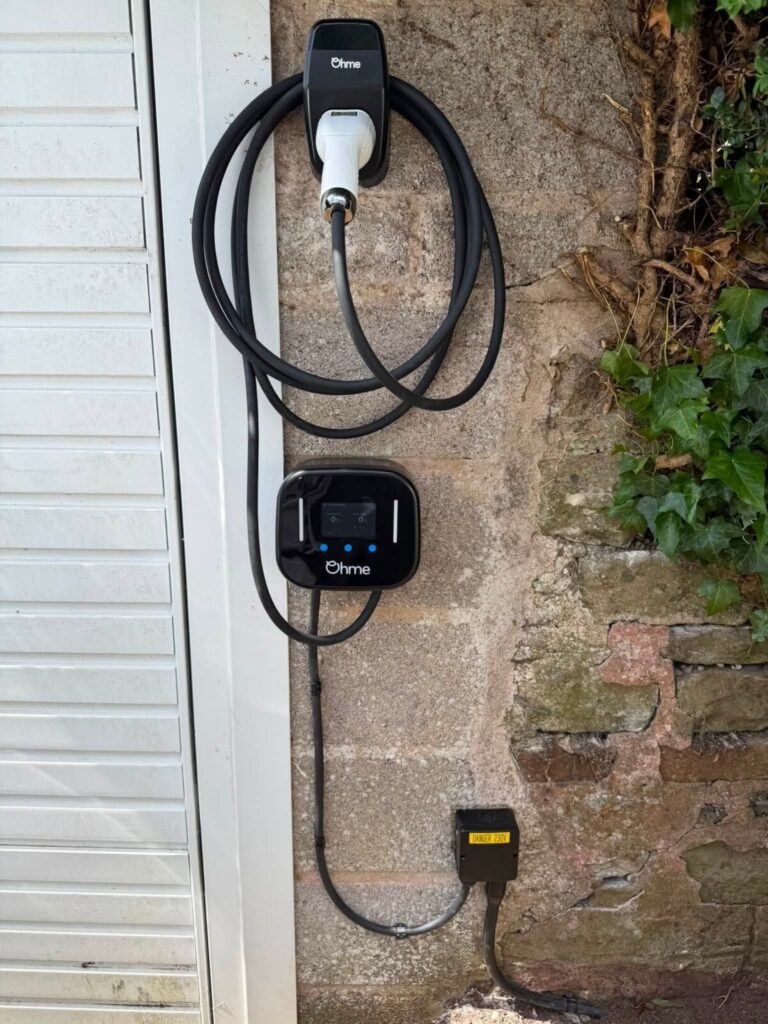
In a village or rural setting, cable routing often requires more thought than the charger itself. Internal routes may pass through cupboards, garages or utility areas, while external routes may need to follow brickwork, timber or a boundary wall. Cables should be protected from abrasion, positioned neatly and supported at appropriate intervals. Any penetration through the building should be sealed properly so that the installation does not create a route for damp, draughts or pests.
A good route is easy to understand and easy to maintain. It avoids unnecessary bends, keeps equipment accessible for inspection and does not rely on temporary protection that will deteriorate outdoors. If trenching is needed across a drive or garden, the depth, protection and reinstatement should be agreed before the ground is opened. Clear planning is especially valuable where paving, gravel, planting or drainage could make later repairs expensive.
The final arrangement should leave the charging lead stored safely when it is not in use. Cable hooks, a suitable holster and a sensible parking position can reduce wear on the connector and help keep the drive tidy. These small details make a noticeable difference to whether the system feels convenient every day.
Protect the Home and Use the Charger Confidently
Safety depends on the complete circuit, not just the visible charging unit. The installation should include the correct circuit protection, appropriate residual-current protection and any measures required by the charger design and the property’s earthing arrangement. Connections must be secure, enclosures suitable for their location and the finished circuit clearly identified at the consumer unit.
After commissioning, the homeowner should receive clear guidance on normal operation, load management, cable care and what to do if the charger reports a fault. It is worth keeping the installation information with other electrical records, particularly if the property may be sold or altered in the future. If an existing circuit shows signs of overheating, damage or nuisance tripping, it should be investigated rather than ignored.
Good maintenance is straightforward: keep the connector clean and dry, check visible cable sections for damage, avoid driving over the lead and arrange an inspection if the charger becomes unreliable or the property’s electrical system changes. For broader home improvements, coordinated lighting installation can also improve visibility around the parking area, entrance and cable storage point without competing with the charger’s dedicated circuit.
Plan Your Welsh Newton Installation with Confidence
A well-designed EV charger installation gives Welsh Newton drivers a reliable way to start each journey with a useful level of charge. The important decisions are made before drilling begins: confirm the property’s electrical capability, choose a position that works with real parking habits, plan a protected route and specify the safety equipment as one complete system.
For a local home, the most valuable outcome is not simply a charger that powers the vehicle. It is an installation that looks considered, operates safely in every season and leaves room for the household’s needs to change. Taking time to plan those details helps the new charger become a dependable part of the property for years to come.