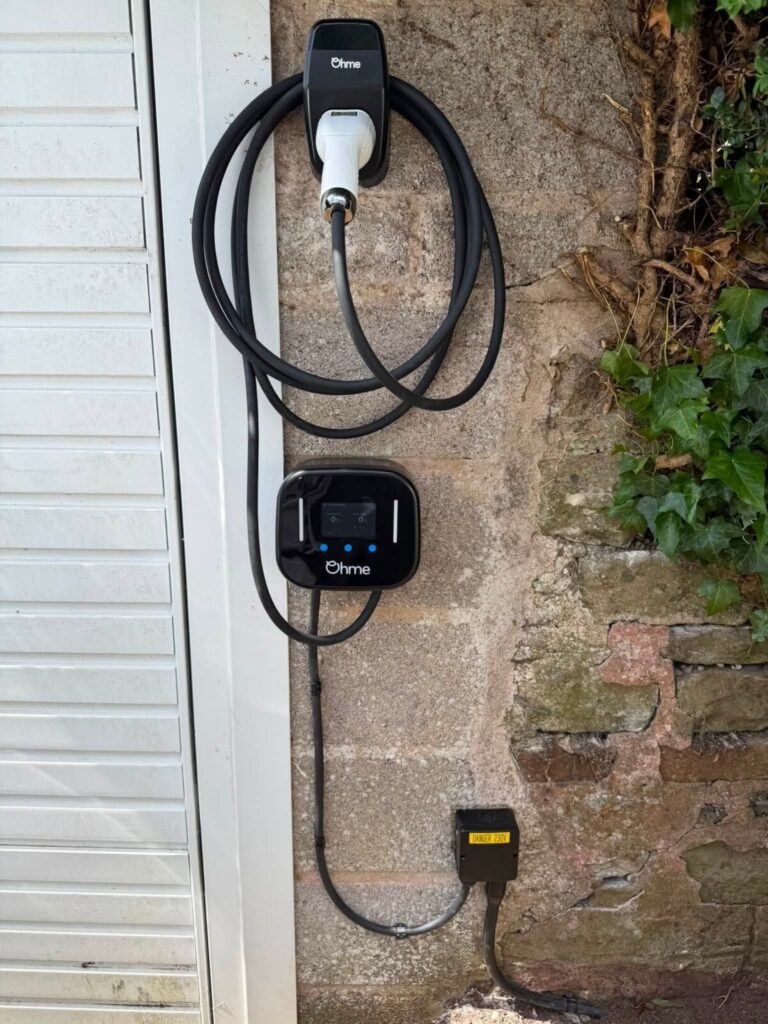
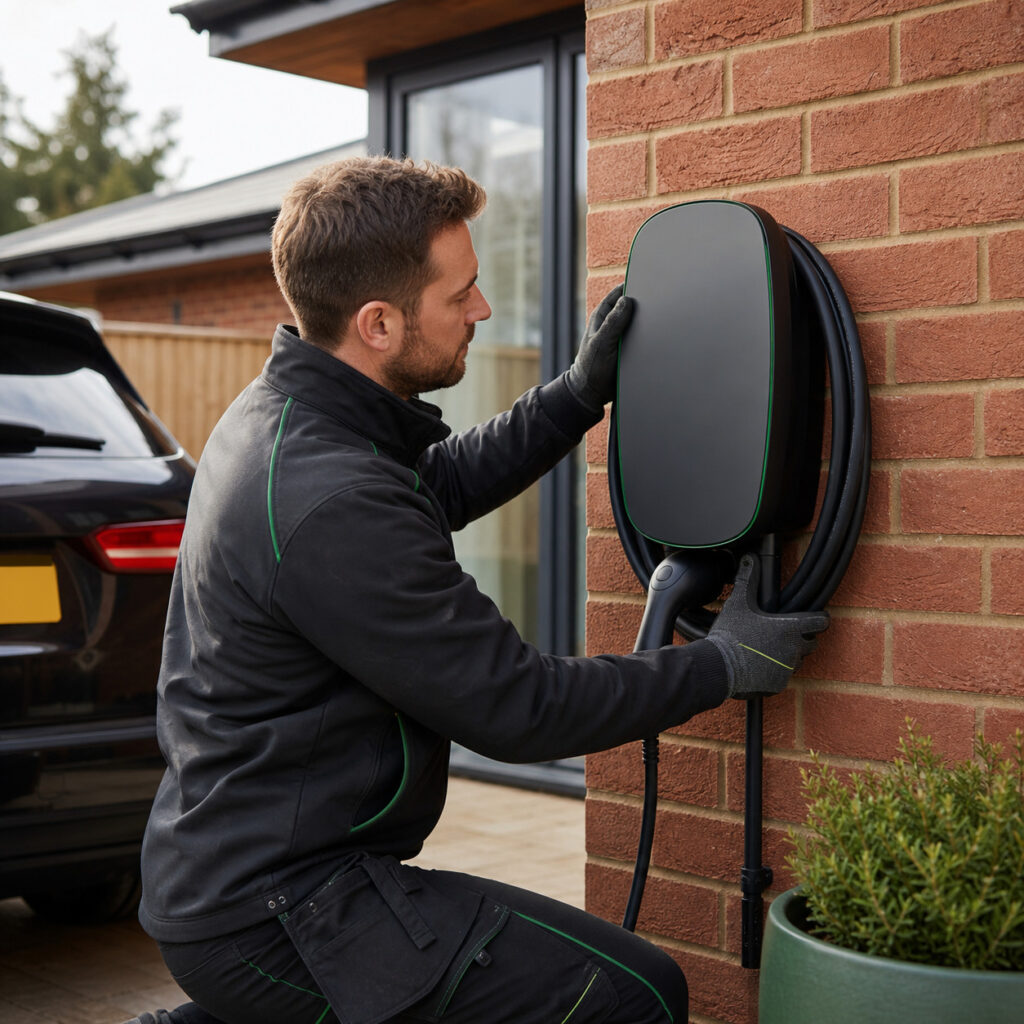
Choosing an EV charger for a Newent home is about more than selecting a charging speed from a product brochure. The installation needs to suit the property, the household’s driving routine and the existing electrical supply. A careful assessment helps avoid inconvenient cable routes, unexpected remedial work and a charger that does not match how the vehicle is actually used.
Newent properties range from newer developments to older homes with extensions, outbuildings and long drives. Each setting creates different practical questions. The charger may need to be positioned close to the consumer unit, routed through a garage, or installed on an external wall while keeping the cable run neat and protected. Planning those details early makes the finished installation easier to use every day.
Assessing the home before choosing a charger
The first step is to understand how electricity enters and moves through the property. An installer can consider the incoming supply, consumer unit, earthing arrangements and the capacity already used by appliances such as an electric shower, heat pump or induction hob. This does not mean every home needs a major upgrade, but it does mean the charger should be designed around the real condition of the installation.
The parking position matters just as much. A driveway beside the house may allow a short, discreet route, while a detached garage or side parking space could require additional protection and a longer cable run. The location of doors, windows, paths and boundaries also affects the safest route. Discussing these points before ordering equipment helps prevent the common mistake of buying a charger first and trying to solve the installation around it afterwards.
It is also worth considering whether the household may add solar panels, battery storage or another electric vehicle in the future. A suitable charger can be selected with future energy use in mind, even when the immediate requirement is for one car. This is where professional EV charger installation planning can provide useful structure and realistic options.
Matching charging features to daily routines
Many households do not need the most powerful charger available. A charger that replenishes the car overnight may be entirely sufficient for a typical commute, whereas a higher-output model may be useful for drivers covering long distances or sharing one charger between vehicles. The right choice depends on the car, the available supply and how long the vehicle is normally parked at home.
Smart charging can make the installation more flexible. Scheduling allows the vehicle to charge during preferred tariff periods, while load management can help balance charging with other demanding appliances. Some systems can respond to the home’s electricity use and reduce charging temporarily rather than placing unnecessary strain on the supply. These features are most useful when they are set up clearly and explained properly, not simply enabled without considering the household’s habits.
Think about everyday usability as well. A tethered cable is convenient when the vehicle is charged frequently, while a socketed unit may look tidier and offer more flexibility for different cables. The controls, app connection and cable storage should all be accessible from the parking position. Small decisions like these have a noticeable effect on whether the charger remains convenient months after installation.
Planning a safe and tidy installation
Outdoor equipment needs to be positioned where it is protected from avoidable impact and remains accessible for maintenance. Cable routes should be secured, protected from abrasion and arranged so that they do not create a trip hazard across paths or doorways. Where a route passes through a wall or garage, the entry point should be finished neatly and sealed appropriately for the building.
The installation should also leave room for inspection and future servicing. A charger hidden behind stored items or mounted where the connector is difficult to reach may technically work but will be frustrating to live with. Good workmanship considers the complete user journey: arriving home, connecting the vehicle in poor weather, checking the charge status and putting the cable away safely.
Any required protective devices and testing should be completed as part of the installation, with the homeowner given clear information about operation and isolation. If the charger is being fitted alongside wider electrical work, coordinating both projects can avoid duplicated access and make the final arrangement more coherent. Broader electrical installation advice can be useful when the charger is one part of a larger upgrade.
Preparing for a dependable result in Newent
Before work begins, make sure the installer knows where the car is normally parked, how the cable should reach the charge port and whether there are plans for solar generation or a second vehicle. Photographs of the consumer unit, driveway and proposed mounting wall can help an initial conversation, but an on-site assessment is still important where access, routing or the condition of the existing installation is uncertain.
Ask what is included in the quotation, including the charger model, cable length, protective equipment, testing, commissioning and any likely additional work. A clear quotation should distinguish standard installation from items that depend on the property, such as a longer cable route, trenching or supply alterations. This makes comparisons fairer and reduces the risk of unexpected costs.
For homeowners who want to discuss the options before committing, contact RP Electrical Installation with the vehicle details, parking arrangement and any relevant information about the property. A considered approach can produce a charger that is safe, practical and ready for the way the household intends to drive.